
Chinese central bank, Peoples bank of China (PBOC) has cut interest rates three times in last six months along with cuts in reserve requirement ratio, margin requirement for second house purchase in a bid to boost China's ailing economy.
However as of now, data points at China may not meet this year's policymakers target for growth of 7%. Industrial production, urban investments, retail sales all pointed at further weakness after first quarter GDP hit 7%, lowest since crisis.
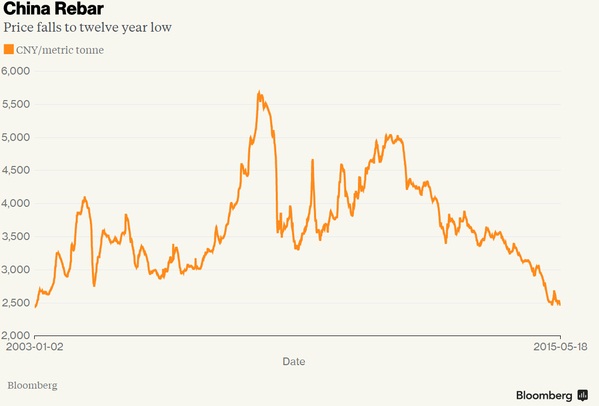
- Today, China's steel prices has hit lowest level since 2003, touching 2500 Yuan /ton. Chart is attached, courtesy Bloomberg markets.
Steel is a key indicator in China's economy due to large investments in factories and construction. China's slowdown has pushed prices from Yuan 5000/ton in 2011 to current level.
This continue to demonstrate that demand is hardly picking up in China, which remains bad news for commodities and its producers.
Australian economy is facing tough time as it is China's key trading partners for raw materials. Iron ore prices would fall further as its end use material steel price continue to drop. Iron ore constitutes about 20% of Australian export.
Continued Chinese slowdown would keep downward pressure on commodities such as iron ore, Steel, Coal and commodity currencies such as Australian dollar and New Zealand Dollar.
Aussie is currently trading at 0.80, while Kiwi is trading at 0.74 against dollar.


