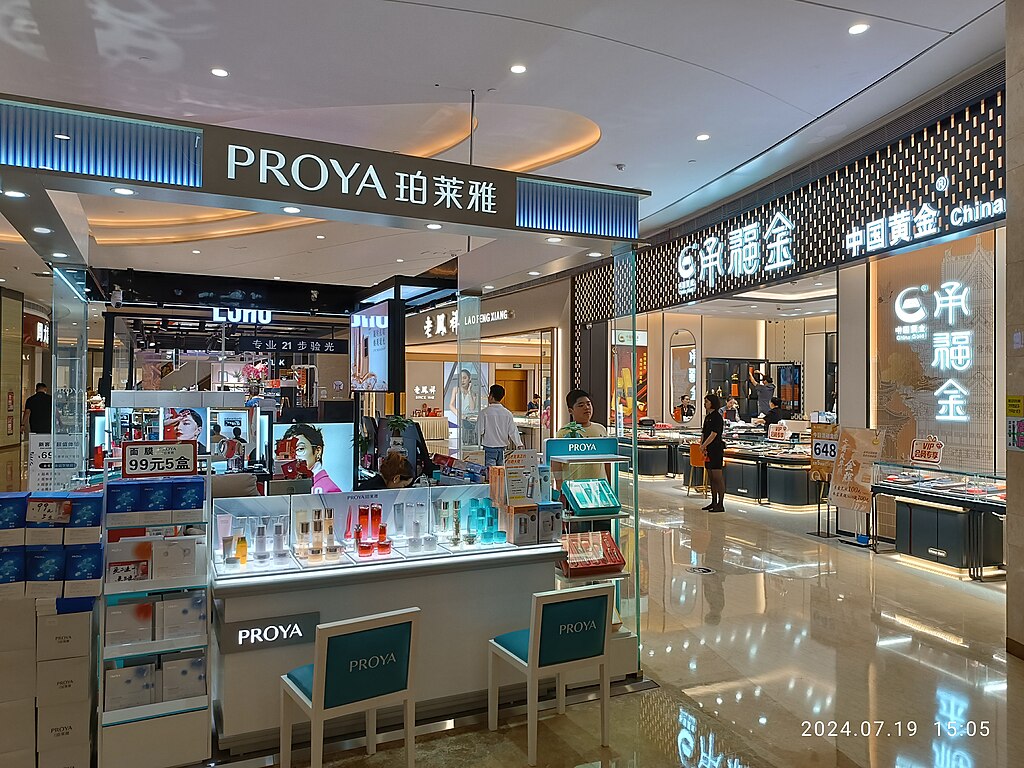
Chinese beauty giants like Proya and S’Young are actively pursuing acquisitions of smaller foreign brands as domestic growth slows and competition intensifies. Seeking to replicate the success of global leaders such as L’Oreal and Estée Lauder, these brands aim to diversify revenue streams and build international portfolios.
Proya, known for its science-driven, affordable skincare, became the first Chinese beauty brand to surpass 10 billion yuan ($1.38 billion) in annual revenue in 2024. Founder Hou Juncheng recently revealed plans to join the global top ten by 2034, targeting 50 billion yuan ($7 billion) in yearly revenue—similar to Japan's Shiseido. The company plans to acquire European beauty brands with strong heritage and technology.
Meanwhile, S’Young and Ushopal have already made inroads abroad. S’Young owns French skincare label Evidens de Beaute and U.S. brand ReVive, while Ushopal has added Payot, ARgENTUM, and Juliette Has a Gun to its portfolio. Ushopal aims to acquire one to two new brands each year.
Experts say Chinese brands will likely target premium European skincare, fragrance, or haircare companies valued under $500 million. However, challenges remain. Past efforts by Chinese fashion groups to expand globally—such as state-owned Ruyi’s failed luxury acquisitions—highlight the risks of managing foreign brands.
Ushopal’s William Lau noted that global M&A is inherently difficult and warned against altering a brand’s identity post-acquisition. Preserving brand DNA, while leveraging Chinese capital and distribution, may be the key to sustainable global success.
With the global beauty market projected to reach $677 billion in 2025, compared to $42 billion in China, international expansion is becoming essential. Analysts predict the rise of a Chinese L’Oreal or Estée Lauder in the near future.