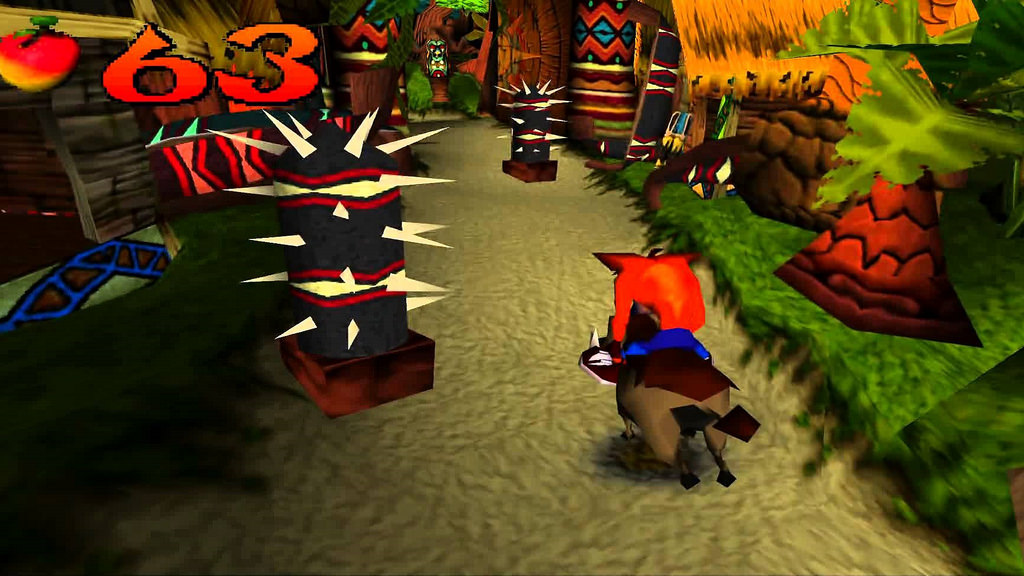
Anyone who played the Crash Bandicoot series on the original PlayStation will likely remember how difficult the games were with fondness. When the remastered versions of the series came out, players were reminded of just how hard the titles could be. Recently, however, the developers behind the slicker Crash games admitted that they are actually harder than the original.
In a hilarious blog post over at Activision, Vicarious Visions admitted that the physics for the new games are a little different than those of the original titles. This is largely due to the fact that the source code for the original games could not be found, which forced the developers to come up with new ones from scratch in a few places.
With regards to the jumps in the N.Sane Trilogy, for example, the developers admitted that players would need to be considerably more precise with their timing. What’s more, it seems that this is just how it is now.
“Our game engine features a different collision system than the original game, and combined with the addition of physics, certain jumps require more precision than the originals. Much like the handling, we iterated on collision and physics throughout development to make it fair to all players and as faithful to the original games as possible,” the post reads.
Despite these problems, however, what the developers achieved with the remastered games is nothing short of incredible, Ars Technica reports. The programmers and designers basically had to eyeball many of the original trilogy’s movements and mechanics in order to emulate them as closely as possible.
What’s more, all three original Crash Bandicoot games had slightly different animations and physics that the developers had to contend with. That the remastered versions came at a price tag of $40 is more than enough reason for forgiving the difference in difficulty.