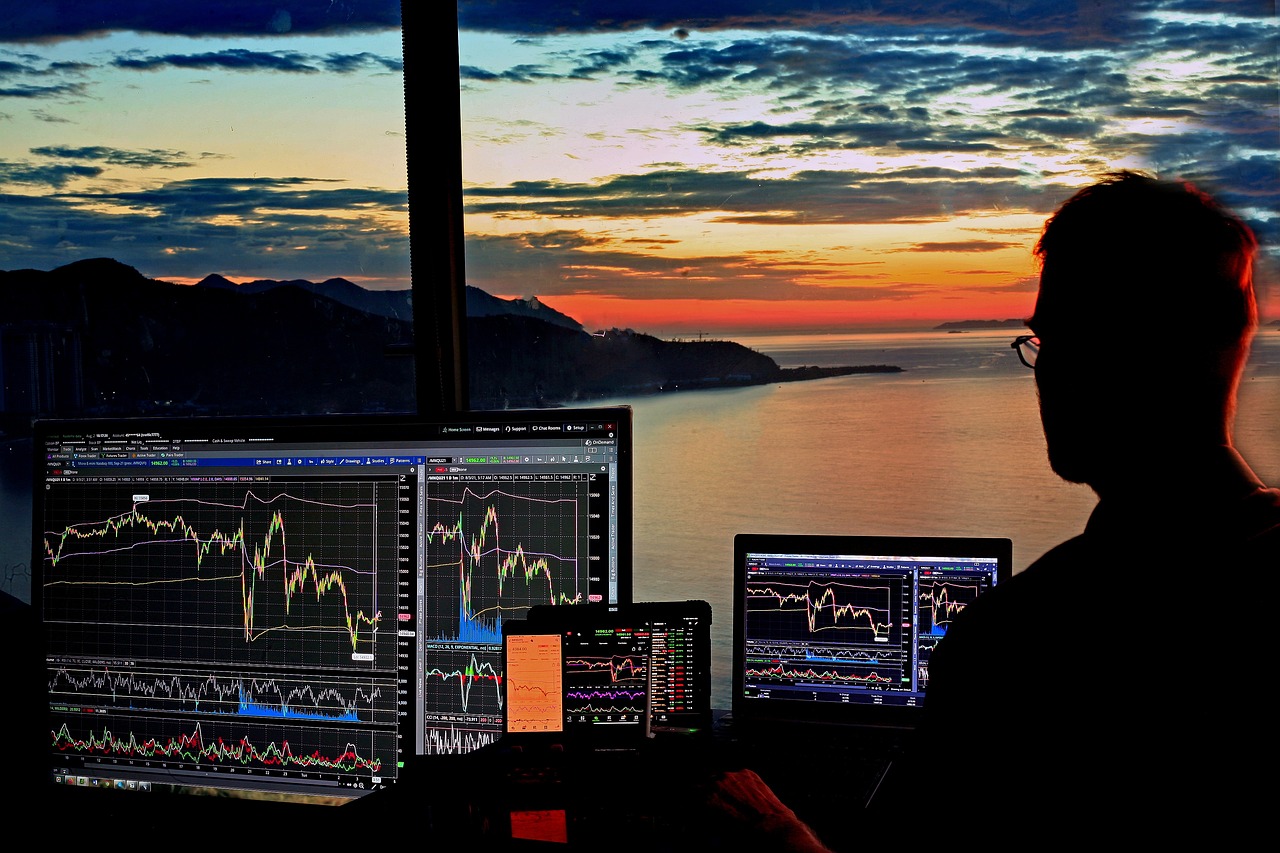
The cryptocurrency market, known for its uncontrolled price swings, can often seem like a rollercoaster. Just like every other investment, there's a chance that your funds could suffer losses, no matter how secure the investment may seem. Effective risk management becomes crucial in pursuing investment success within this framework.
This article explores different strategies for navigating and balancing risks and rewards in the cryptocurrency realm. While you are here, you can also learn more about popular crypto slots in USA.
Risk Management in Cryptocurrency
Engaging in cryptocurrency trading inevitably exposes you to unfavorable situations. These can manifest as trades not going according to plan, unexpected price spikes, errors, and other unexpected events.
Risk is an intrinsic aspect of trading, a reality that every cryptocurrency trader must acknowledge. Neglecting solid risk management strategies can considerably affect your trading account. This could potentially result in the loss of your entire investment.
Proper risk management practices make outlining your approach to handling trading risks easier. They function as a buffer against potential trade setbacks and allow you to be in charge.
These approaches protect you and can contribute to achieving your expected market goals when implemented alongside appropriate cryptocurrency trading strategies.
Calculating Risk and Reward in Crypto
Trading cryptocurrencies can yield unimaginable rewards, especially for individuals who acknowledge its unforgiving nature. Therefore, we must hone our skills to learn and manage risk rather than futilely attempt to avoid it.
The journey to proper risk management starts with acquiring the ability to quantify the risks associated with cryptocurrencies, transforming market uncertainties into analyzable figures and data.
Risk-to-Reward Ratio
Finding a harmonious equilibrium between reward and risk is wise when assessing any investment. An important tool that assists us in making a thoughtful evaluation of this bargain is the risk/reward ratio.
The risk/reward ratio gauges a trade's potential loss to profit on any given trade. Essentially, it evaluates the potential reward relative to the assumed risk.
For instance, an investment's 1:2 risk/reward ratio suggests that you could earn $2 for each dollar at risk if the trade moves in your direction.
This ratio is key in crypto trading, whether you are involved in daily trading activities or committed to long-term investment, often known as "hodling."
While not infallible, these approximations aid in a thoughtful assessment to determine if a trade opportunity suits our objectives and risk appetite. Naturally, in the constantly shifting landscape of the cryptocurrency market, you must remain adaptable.
The risk/reward ratio offers an initial direction. Still, it is essential to reevaluate with updated information and discernment in the face of increased volatility. Additional navigational tools such as trading analysis, strategies, and monitoring can and should supplement the ratio.
Asset Allocation
Excel is a widely acknowledged tool with professional and daily life applications. You don't need to be an expert to perform fundamental risk management tasks on the software.
All that's required is a basic grasp of constructing a straightforward table, enabling you to experiment with calculations on cryptocurrency conversion, asset allocations, and similar activities.
For example, you can make a table featuring chosen cryptocurrencies organized into "Group 1," "Group 2," and "Group 3." The categorization scheme is entirely open to your imagination. You can then allocate your investments within a range of 2% to 10%. This range signifies the percentage of the overall balance you are ready to risk on a specific asset.
After your plan is devised, implement your trades based on your chosen assets and the percentage allocated. After that, closely observe your portfolio's performance.
Risk Management Strategies in Crypto
Remember that no trade opportunity is worth jeopardizing what you cannot comfortably lose. This principle applies universally across all financial markets and becomes even more critical in cryptocurrencies.
Considering the high price volatility in the crypto market, incurring substantial losses in hours is very possible. So, it really is a matter of common sense.
Never commit more funds than you can comfortably spare, as the unforgiving volatility of cryptocurrencies leaves no room for leniency. Before embarking on any investment journey, carefully assess whether it aligns with your risk tolerance.
With market-tested risk management strategies at your disposal, you can navigate the market dynamics while taking advantage of possible risks.
Stop Loss Strategies
Significant losses often happen when you neglect to set a stop loss. Many traders hold onto losing trades, adjusting the stop-loss away from their initial risk level due to not wanting to admit they were wrong about the market.
To trade successfully, it's important to be logical and not driven by emotions. Stick to your trading plan and use risk management tools correctly. There are different methods for setting stop losses:
-
Chart Stop: This approach uses technical analysis, such as support and resistance levels, to determine stop-loss points based on market movements.
-
Percentage Stop: This method involves risking a predetermined percentage of your trading account on a trade, like 2%. However, it may not consider market conditions.
-
Time Stop: This sets a specific time to close running trades, like closing all active positions at the end of each day to avoid tying up capital in stagnant trades.
-
Volatility Stop: This method uses market volatility indicators like Bollinger Bands or the Average True Range (ATR) to set stop-loss levels, allowing for some flexibility.
Remember, your stop-loss should be based on your trading system's rules or market conditions, not your risk appetite. This approach leads to a more effective risk management practice.
Position Sizing
Position sizing in cryptocurrency trading revolves around determining the quantity of a cryptocurrency to purchase or sell, contingent on the maximum financial loss you are willing to endure, popularly called "max risk."
For short-term trades, novice traders are frequently advised to restrict their maximum risk to 1-2% of their entire portfolio. They may consider raising it to 5% for longer-term trades.
To illustrate, if you possess a $5,000 account and intend to acquire a $20 token while capping your max risk at 2% (equivalent to $100), your stop loss should be $15. This arrangement implies that you would leave the trade should the token's price decline to $15, resulting in a potential loss of $5 per token ($20 - $15).
To calculate the position size, you divide your max risk ($100) by $5 ( the possible loss per token, which gives you twenty tokens. So, you would buy twenty tokens. If the price indeed falls to $15, selling the twenty tokens would result in a total loss of $100, which aligns with your 2% policy of maximum risk.
Scaling
When entering a trade, splitting your exit and entry orders into multiple transactions close to your calculated exit/entry zone is often wise, especially if you're unsure about the exact price. This approach helps reduce the risk of a high or too-low entry price.
For instance, suppose you wish to buy a token priced at $20, but you expect a potential dip to $16 before any signs of an upward trend. In this situation, you can employ a divided approach.
Rather than purchasing all 20 tokens simultaneously at $20 each, you might consider buying five at $20, another at $18, and the remaining ten at $16.
This approach enables you to engage partially if the price doesn't drop below $20. Moreover, it averages your entry price to $17.5 if it falls to $16. Setting a stop loss at $15 with a loss of $2.5 per token and holding 20 tokens would limit your maximum risk to $50.
These principles may seem straightforward, but grasping and implementing them can prove invaluable in preventing significant setbacks, especially when you're new to trading.
Emotional Control
Many traders often ignore emotional stability despite its vital role in trading. "Behavioral Finance," a significant field of study, explores the psychological factors and consequences that impact active portfolio management and trading. Your emotional state can significantly influence the decisions you make in trading.
Thus, shielding your mental calm from external stressors such as unresolved conflicts or impending exam pressure is essential.
When your emotional balance is disturbed, it can quickly impair your concentration, a crucial aspect of decision-making in trading and investing. Numerous strategies are available to distance yourself from real-life distractions or issues temporarily.
While meditation can benefit some individuals, it may not be effective for everyone. Nevertheless, the objective remains the same: utilize all accessible psychological techniques to enhance focus and calm the mind when thoughts become chaotic and the mind races. Failing to do so could jeopardize your risk management strategy.
Education
It might sound like a common piece of advice. Still, it holds true: practice and education are essential for enhancing your trading abilities. The market is constantly evolving, rendering a strategy effective today potentially redundant the next day.
To stay in sync with the market's changes, continuous learning of new tools and strategies is imperative. Moreover, solid adherence to risk management practices is vital. The practice of new and effective strategies is also of utmost importance.
Successful trading necessitates a continuous commitment to education, learning, and skill enhancement, enabling you to adapt as market dynamics evolve. You can progressively become a more proficient trader with the proper education and consistent practice.
This article does not necessarily reflect the opinions of the editors or management of EconoTimes