


 Samsung, SK Hynix Shares Fall as China's CXMT Advances DRAM Technology
  Wall Street Ends Mixed as Investors Await CPI and Bank Earnings
  Asian Currencies Steady as Dollar Nears 18-Month High Ahead of US CPI
  New York Times, AFP Join Coalition to Protect Content From AI
  MNX Crypto Exchange Launches Futures for OpenAI, Anthropic Valuations
  Alibaba Unveils Qwen AI Smart Glasses, Shares Rise 2%
  Nasdaq Falls as Oil Prices Surge Ahead of Bank Earnings
  IMF Warns US Debt Crisis Needs Fiscal Action, Urges China to Boost Consumption
  Nvidia’s China AI Chip Market Share Falls to 34% as Huawei Gains Ground
  Fed's Hammack Urges Faster Rate Hikes to Fight Inflation
  OpenAI Uses AI to Uncover Hidden Recording Device, FBI Makes Arrest
  Samsung, SK Hynix Shares Plunge as China Chip Competition Grows
  Nvidia Invests in Four French AI Companies to Expand European Presence
  Apple Supplier Luxshare Faces US Patent Probe, Sees Limited Impact
  Asian Stocks Fall as Oil Prices Rise Ahead of US CPI Data
  IMF Maintains 2027 Global Growth Forecast at 3.4% Amid Rising Risks
  US Dollar Index Falls as Fed Signals Caution, Indian Rupee Surges


 Add as a preferred source on Google
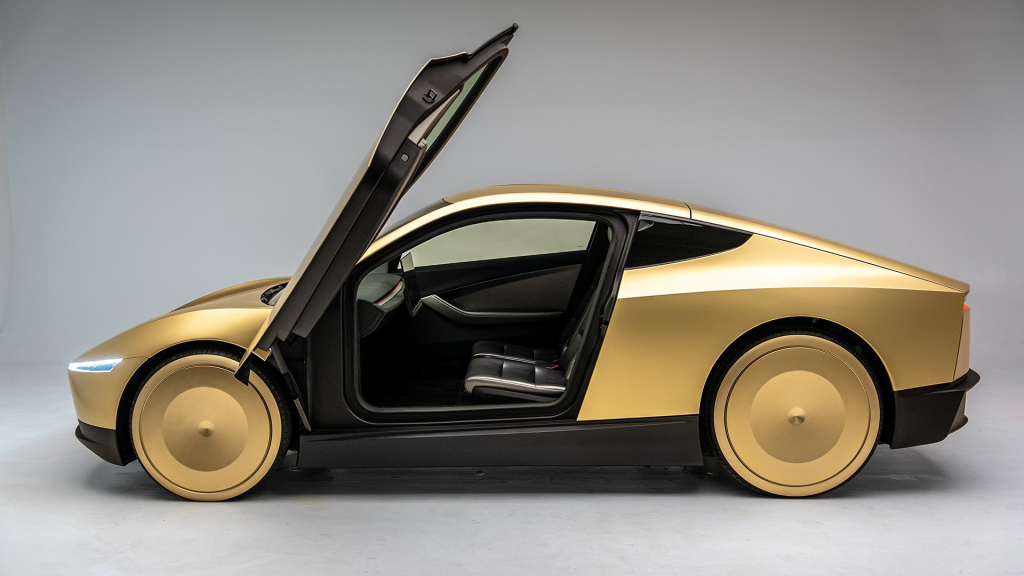
Tesla’s Cybercab, unveiled by the company’s lead engineer, pushes self-driving innovation with a compact two-seat design, half the parts of a Model 3, and impressive storage capacity. This efficiency-focused robotaxi sets a new standard for rideshare technology.
Tesla Cybercab's Two-Seat Design: A Solution for Efficiency
According to Teslarati, several intriguing details on the forthcoming autonomous robotaxi were recently divulged by Eric E., Lead Engineer at Tesla Cybercab. These encompass the Cybercab's two-seat layout, its effectiveness, and its unexpectedly sparse component count.
Because most kilometers driven today are with just one or two people, the Lead Engineer for Tesla's Cybercab says that the Cybercab is a two-seater. If more people need a robotaxi, Tesla could easily accommodate them with its other, larger vehicles, such as the Model Y.
“One of the questions we get constantly with this product is why is it two seats? There’s a couple reasons why it’s two seats. One is 82% of miles driven today are with two or fewer passengers. This product is meant to be of extreme efficiency. We worked really hard to deliver that. And the efficiency isn’t just on an energy consumption base. It’s on the concept of cleaning, it’s also on the concept of reliability and service as well,” Eric E. pointed out.
Half the Parts of a Model 3: Tesla’s Engineering Feat
Additionally, the Cybercab Lead Engineer clarified that the self-driving car will be manufactured with minimal components due to Tesla's emphasis on the robotaxi's efficiency.
Cybercab components are similar to those of a Model 3 sedan, according to Eric E. Considering the Model 3 is already among the most aerodynamic cars available, this is rather astounding.
“Two seats unlocks a lot of opportunity aerodynamically. It also means we cut the part count of Cybercab down by a substantial margin. We’re gonna be delivering a car that has roughly half the parts of Model 3 today. It also means when you need to clean the car as a rideshare asset, you really don’t have to worry about navigating multiple doors, multiple seats. You really just have what looks like a bench seat, easy to clean automatically,” the Tesla engineer observed.
Spacious Trunk Defies the Cybercab’s Compact Size
Other noteworthy design details of the Cybercab were also revealed by Eric E., including the fact that, for such a diminutive robotaxi, it has an enormous trunk.
A number of golf bags, two standard carry-ons, and two standard checked bags can all fit in the Cybercab's trunk simultaneously. It can also accommodate a foldable wheelchair and, depending on their size, a few bicycles.







