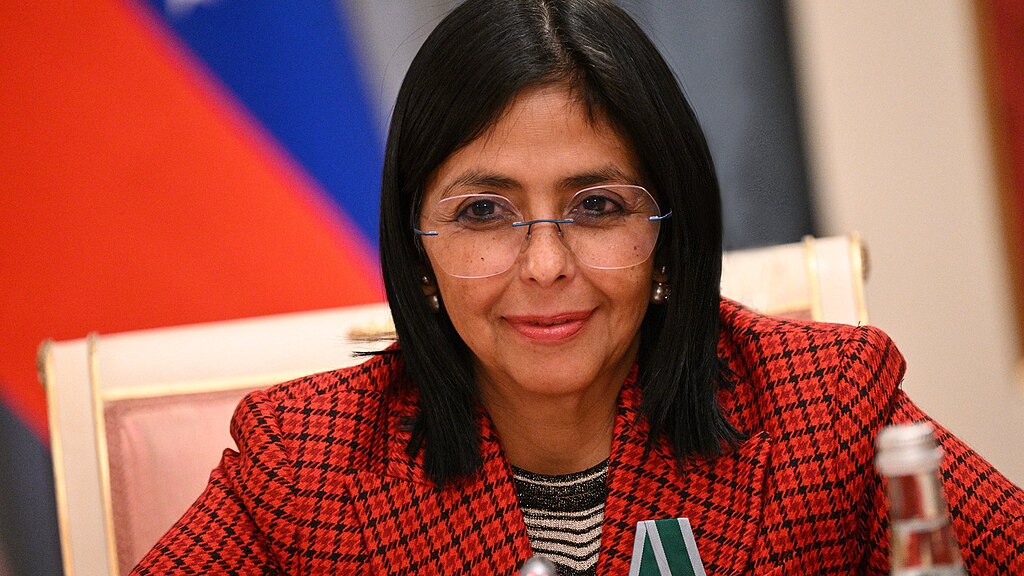
Venezuela entered a dramatic new political chapter on Monday as Vice President and Oil Minister Delcy Rodríguez was formally sworn in as the country’s interim president. The move came after long-time leader Nicolás Maduro appeared in a New York court on drug trafficking charges, following a surprise weekend military operation that the Trump administration said removed him from power.
Rodríguez, 56, is a labor lawyer with deep roots in Venezuela’s ruling socialist movement and strong ties to both the state and private sectors. Known for her unwavering loyalty to the governing party, she was sworn in during a ceremony led by her brother, Jorge Rodríguez, who currently serves as head of the National Assembly. Her appointment is being closely watched both domestically and internationally, as Venezuela faces ongoing political instability, economic crisis, and heightened tensions with the United States.
The swearing-in ceremony also marked the formal induction of 283 lawmakers elected in legislative elections held last May. Those elections were widely criticized by opposition groups and international observers. Only a small fraction of the newly sworn-in legislators are classified as opposition members, as most major opposition parties boycotted the vote. The boycott was led in part by factions aligned with Nobel Prize-winning opposition figure María Corina Machado, who argued that the electoral process lacked transparency and legitimacy.
One notable absence from Monday’s ceremony was First Lady Cilia Flores, who was not present due to being in U.S. custody, according to officials. Her absence further underscored the extraordinary circumstances surrounding the transition of power.
The developments mark a significant escalation in U.S.-Venezuela relations, particularly as the Trump administration framed Maduro’s removal as a decisive action against alleged narco-trafficking and corruption at the highest levels of the Venezuelan government. As Delcy Rodríguez assumes the role of interim president, questions remain about the country’s political future, the legitimacy of its institutions, and the potential for renewed dialogue or further conflict on the international stage.