


 Asian Currencies Steady as Dollar Eyes Fourth Weekly Gain
  Oil Prices Slip as Trump Rules Out Iran Strike Before Midterms
  Gold Prices Hit One-Week High as Oil Falls, Fed Rate Outlook Weighed
  Iran Refuses to Halt Uranium Enrichment Amid US Nuclear Demands
  US Dollar Hits 18-Month High as Fed Signals More Rate Hikes
  RBI Raises Repo Rate to 5.50% in Hawkish Shift on Inflation Risks
  Wall Street Falls as Oil Prices Rise and Tech Stocks Slide
  Trump Calls for Zelenskyy Replacement Amid Russian Diesel Deal
  Oil Prices Rise as Hormuz Risks Offset IEA Stock Release
  US Dollar Rises for Fourth Week as Fed Rate Hike Bets Grow


 Add as a preferred source on Google
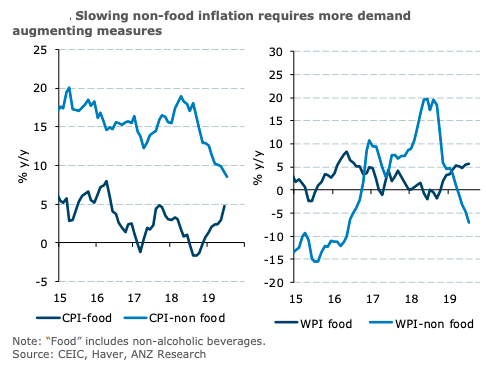
Demand augmenting measures are needed to revive India’s waning consumption growth; this will support convergence of inflation rates across regions and states, making monetary policy more effective, and between CPI and WPI as firms regain pricing power, according to the latest report from ANZ Research.
India’s inflation data mirror the weak consumption trends in recent months. Although headline inflation for September edged higher towards the Reserve Bank of India’s (RBI) target, it was led primarily by food prices and is likely to be short-lived, the report added.
Meanwhile, core inflation has continued to slip, in line with weak demand. However, the difference between rural and urban consumer price index (CPI) has been amplified in 2019. Higher food prices have pushed up urban CPI relative to its rural counterpart despite food occupying a higher weight in the rural CPI basket.
Core inflation has been moderating for both. The difference in inflation rates is visible across Indian states as well, with the degree of inter-state variation also increasing in recent years. More states have exhibited slower headline and food price inflation in the last two years, compared with their six-year averages.
The trends in CPI and wholesale price index (WPI) are also diverging, led by the difference in non-food products. It is clear that manufactured products are driving the slide in WPI, indicative of the weak pricing power of industrial companies.
This sits with the sharp decline in the RBI’s forward-looking surveys for capacity utilisation rates. Amid the differing trends, what stands out is a secular slowdown in non-food inflation across these indices, ANZ Research further noted in the report.







