


 Greenland Lawmakers Back Trump Security Deal Despite Economic Concerns
  Most Americans Oppose Election Betting on Prediction Markets, Poll Finds
  Trump Sanctions International Criminal Court, Sparking EU Backlash
  NATO Commander Warns Russia of Devastating Response to Attack
  North Korea Fires Ballistic Missiles Amid Rising Tensions With South Korea
  Elon Musk Donates $366 Million to 2026 US Midterms
  Mahmoud Abbas Postpones Palestinian Elections to September 2027
  Trump Announces Russia-Ukraine Energy Ceasefire Amid U.S. Pressure on Kyiv
  US Condemns China Sanctions on Taiwan Allies Belize and Paraguay
  Pakistan Declares Emergency in Khyber Pakhtunkhwa, Suspends Imran Khan’s PTI Government
  Trump Defends Russian Diesel Deal Amid US Sanctions Backlash
  Djibouti Migrant Boat Capsizes, Killing 139 and Leaving 84 Missing
  UK Finance Minister Healey Calls for Fiscal Discipline Amid Global Risks
  Trump Calls for Zelenskyy Replacement Amid Russian Diesel Deal
  Russian Strikes Kill Six in Ukraine, Including Three in Kharkiv
  US Authorities Raid Ilhan Omar’s Home Amid Immigration Fraud Probe


 Add as a preferred source on Google
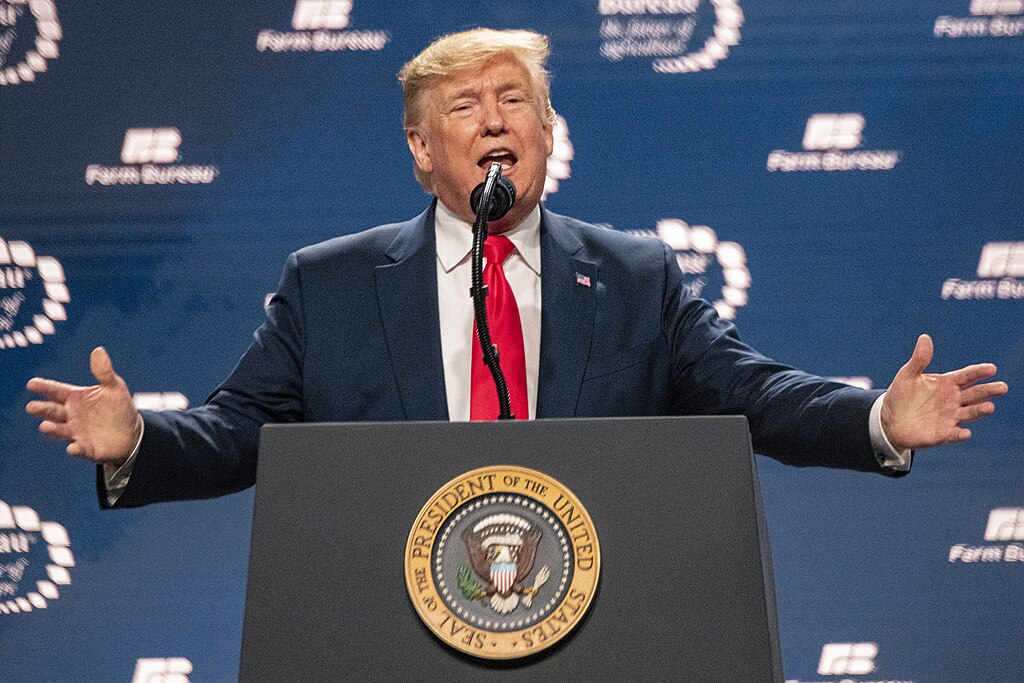
Former President Donald Trump has stirred controversy with a proposal to lift U.S. sanctions on Russia and Iran, arguing that these economic penalties are weakening the U.S. dollar and harming America’s global financial standing. The suggestion comes as Trump positions himself for a potential 2024 presidential run, reviving many of his past foreign policy stances and raising questions about how such a move would impact both the U.S. economy and its foreign relations.
Trump’s call to remove sanctions centers on the belief that economic restrictions placed on adversarial nations are having unintended consequences, particularly for the U.S. currency. The former president contends that the sanctions, imposed as part of long-standing U.S. policy to curtail the actions of Russia and Iran, have backfired by pushing these countries to seek alternative trade and financial systems. This, in turn, may be reducing demand for the U.S. dollar and weakening its global dominance.
During his presidency, Trump expanded sanctions on both nations, including penalties on Russia following its annexation of Crimea and cyberattacks on the U.S., as well as sanctions on Iran as part of his administration’s withdrawal from the Iran nuclear deal. These sanctions were designed to isolate the two countries economically, restricting their access to international markets and financial institutions.
Now, in a reversal of those earlier policies, Trump suggests that removing these sanctions could revitalize the U.S. dollar and prevent countries like Russia and Iran from deepening their economic partnerships with China and other non-Western allies. The rise of alternative trade systems and currencies, such as Russia’s pivot to the Chinese yuan or Iran’s engagement with cryptocurrencies, has led to concerns about the dollar’s global dominance.
Critics of Trump’s proposal warn that lifting sanctions on adversarial nations could have far-reaching geopolitical consequences. Removing sanctions on Russia, in particular, could be seen as a softening of U.S. opposition to its ongoing military actions in Ukraine and other hostile activities. Similarly, easing sanctions on Iran could undermine efforts to prevent the country from advancing its nuclear program.
Proponents of the sanctions argue that they remain a critical tool in curbing malign activities by these governments and maintaining U.S. leverage in international diplomacy. They contend that the potential damage to the dollar is outweighed by the necessity of holding countries accountable for actions that violate international law or threaten global security.
EconoTimes cannot independently verify the rumor surrounding Trump’s proposal to remove sanctions on Russia and Iran. The statements reflect ongoing political debate and are subject to further clarification.
As the 2024 election cycle heats up, Trump’s stance on sanctions is likely to become a focal point of his foreign policy platform. Whether the removal of economic penalties on Russia and Iran would bolster the U.S. economy or diminish its global influence remains a topic of intense debate among experts, with far-reaching implications for both domestic and international policy.







