


 Elon Musk Donates $366 Million to 2026 US Midterms
  UK Finance Minister Healey Calls for Fiscal Discipline Amid Global Risks
  North Korea Fires Ballistic Missiles as Tensions With South Korea Escalate
  Trump Plans White House Shake-Up of Key AI Safety Agency
  Trump Announces Russia-Ukraine Energy Ceasefire Amid U.S. Pressure on Kyiv
  NATO Commander Warns Russia of Devastating Response to Attack
  Pakistan Declares Emergency in Khyber Pakhtunkhwa, Suspends Imran Khan’s PTI Government
  Houthis Warn Saudi Airports After Deadly Riyadh Attack
  US Authorities Raid Ilhan Omar’s Home Amid Immigration Fraud Probe
  Most Americans Oppose Election Betting on Prediction Markets, Poll Finds
  US Condemns China Sanctions on Taiwan Allies Belize and Paraguay
  India Voter List Protests Reach Supreme Court as Opposition Demands Election Chief's Resignation
  Djibouti Migrant Boat Capsizes, Killing 139 and Leaving 84 Missing
  Mahmoud Abbas Postpones Palestinian Elections to September 2027
  US Judge Blocks Trump Administration’s Taxpayer-Funded Political Ads
  Trump Defends Russian Diesel Deal Amid US Sanctions Backlash


 Add as a preferred source on Google
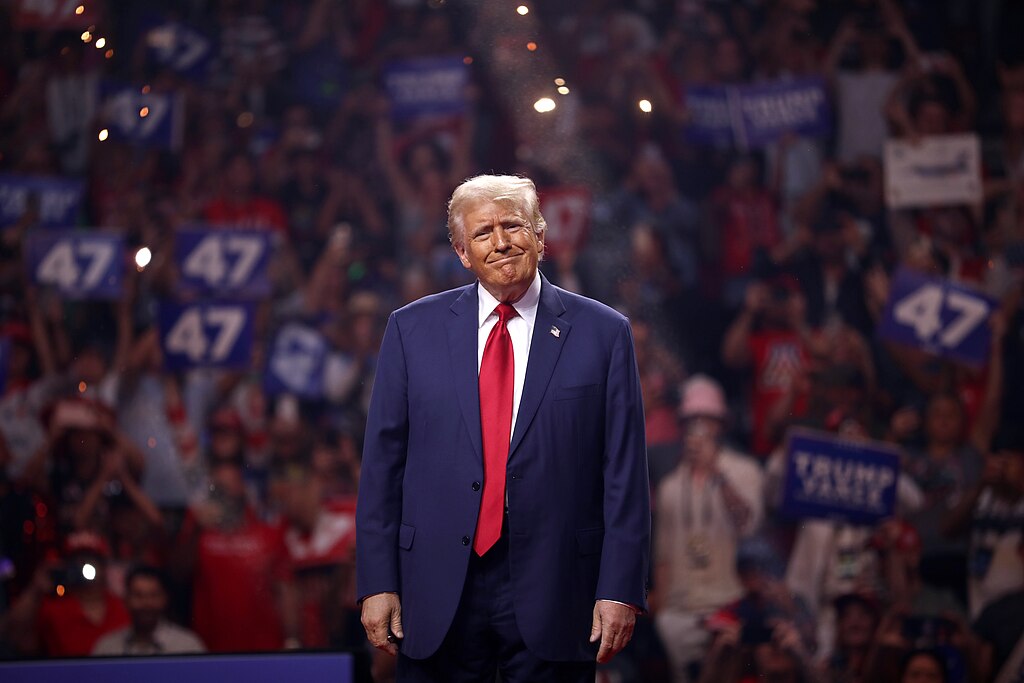
As the 2024 presidential race intensifies, former President Donald Trump has laid out an aggressive and sweeping plan to address border security, reigniting the immigration debate with proposals aimed at curbing illegal migration and reinforcing U.S. sovereignty. In his latest campaign announcement, Trump detailed a multi-pronged strategy that promises to secure the southern border, halt the flow of undocumented migrants, and initiate what he claims would be the largest deportation operation in American history.
Trump’s new border security agenda, which he has framed as a response to what he calls the "border crisis," proposes a series of controversial measures that reflect his hardline stance on immigration. From reviving policies like “Remain in Mexico” and Title 42, to sending federal law enforcement into specific jurisdictions, Trump’s plan is designed to roll back Biden administration policies and reassert federal control over immigration enforcement.
Key Proposals in Trump’s Border Plan
Central to Trump’s strategy is the immediate cessation of migrant flights and the shutting down of entry points facilitated through migrant apps. These programs, which were implemented to manage migration flows, would be eliminated under his administration, with Trump pledging to return to a zero-tolerance policy that prioritizes border closures and strict enforcement.
The former president’s plan also includes a promise to end catch-and-release, a practice that allows migrants seeking asylum to be released into the U.S. while awaiting court proceedings. Under his proposal, all migrants would either be detained or required to wait in Mexico until their legal cases are resolved—an expansion of the "Remain in Mexico" policy that was central to Trump’s border strategy during his time in office.
Another key component of Trump’s plan is the revival of Title 42, a public health policy used to expel migrants during the COVID-19 pandemic. The Biden administration rolled back this policy in 2023, but Trump insists that reinstating it would be necessary to stop what he describes as an “invasion” at the border.
Crackdown on Sanctuary Cities
In an unprecedented move, Trump is also proposing federal intervention in local jurisdictions that have designated themselves as “sanctuary cities,” where local law enforcement limits cooperation with federal immigration authorities. Specifically, Trump singled out Aurora, Colorado, as a target for federal law enforcement intervention. He claims his administration would "liberate" such cities from policies that protect undocumented migrants.
Furthermore, Trump pledged to send a bill to Congress that would ban sanctuary city policies altogether, forcing local governments to comply with federal immigration law or face consequences.
Massive Deportation Operation
Perhaps the most controversial aspect of Trump’s plan is his proposal to initiate the largest deportation operation in U.S. history. Although details on how this would be executed remain vague, Trump promises that his administration would significantly ramp up deportations, targeting millions of undocumented individuals across the country.
Political Implications
Trump’s plan is likely to resonate with his core supporters, many of whom favor stricter immigration controls and have expressed frustration with the Biden administration’s handling of the border. However, the proposals are expected to face significant opposition from immigration advocates, civil rights groups, and Democrats who argue that such measures would lead to humanitarian crises and violate international asylum agreements.
The sweeping nature of Trump’s border security proposals underscores the central role immigration will likely play in the 2024 presidential campaign, especially as he seeks to differentiate himself from his competitors and recapture the White House. His hardline stance is poised to reignite debate over the U.S.’s immigration system, federalism, and the balance of power between state and federal governments.
Disclaimer: EconoTimes cannot independently verify the specifics of Trump’s proposed border security plan or the feasibility of its implementation.
As the 2024 campaign unfolds, Trump’s aggressive border security strategy will be closely scrutinized, with both supporters and detractors weighing the potential consequences of such a drastic approach. While his base is likely to rally behind these measures, the broader political impact remains uncertain, particularly as immigration continues to be a divisive issue in American politics.







