


 Gaza Olive Harvest Collapses as War Destroys Farmland
  Container Ship Sinks in Strait of Hormuz as Iran Attacks Escalate
  US Justice Department Drops Prosecution of Ex-CIA Analyst Sue Mi Terry
  Most Americans Oppose Election Betting on Prediction Markets, Poll Finds
  Trump Announces Massive Oil and Mineral Exploration Plans in Greenland
  Trump Denies China, Russia Are Helping Iran in War
  MI5 Warns of Rising Iran, Russia Threats and AI Bioweapon Risks
  Flavio Bolsonaro Backs Brazil’s 40-Hour Workweek Reform Ahead of Runoff
  Trump Confirms US Intelligence Sharing With Ukraine Amid Russian Strikes
  IMF Warns US Debt Crisis Needs Fiscal Action, Urges China to Boost Consumption
  US Supreme Court Denies Release of Anti-ICE Activist Kyle Wagner
  UN Urges Talks on Lebanon Peacekeeping Mission Extension
  Zelenskiy Says Trump’s Support for Russia Is ‘Painful’
  Jordan Bardella Antisemitism Allegations Threaten Le Pen’s Campaign
  FBI Denies Report of Kash Patel’s Russia Visit
  Trump Denies Russia and China Are Helping Iran in U.S. Conflict


 Add as a preferred source on Google
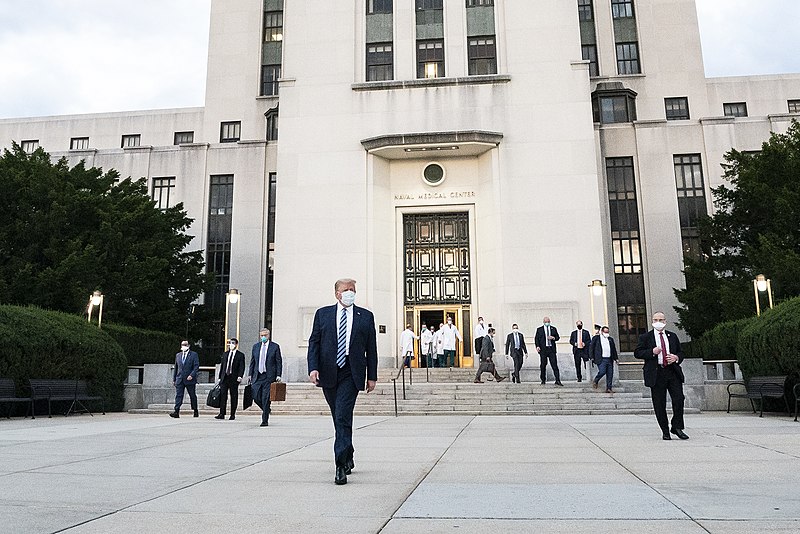
Following the news of Donald Trump testing positive for COVID-19 last week, he has since been recovering from the disease at the White House. However, his condition comes over a week until the second presidential debate and a few weeks before the third and final debate. With the commission-in-charge considering a virtual format for the debate, Trump has dismissed the idea.
Trump dismissed the idea of debating his Democratic challenger Joe Biden in a virtual setting, for the next two presidential debates. Speaking to Fox Business, Trump weighed in on a possible virtual debate, saying that he will not bother to appear should the format be in that manner. “I’m not going to do a virtual debate,” said Trump.
The comments follow as the Commission on Presidential Debates has announced a virtual format for the two candidates’ debates. This was a result of Trump’s coronavirus diagnosis, which the president has claimed to have made a full recovery. The Biden campaign has since responded to Trump’s comments, saying that they have already agreed to a virtual debate format. But because Trump will not want to attend should the debate be in that manner, they suggested that the third debate on October 22 be a town hall format instead.
Trump campaign manager Bill Stepien has also suggested that the debate originally scheduled for October 15 be moved to October 22 and the third debate be moved to October 29, days before the November elections. However, the Biden campaign rejected the suggestion, saying that the Debate Commission is in charge of scheduling the debates.
Later on, following the news of Trump’s physician gave him the clear to return to campaigning. The Trump campaign has called on the Debate Commission to push through with next week’s debate but only in person.
“There is, therefore, no medical reason why the Commission on Presidential Debates should shift the debate to a virtual setting, postpone it, or otherwise alter it in any way,” said campaign manager Bill Stepien.
Despite the insistence to hold the next debate in person, commission chair Frank Fahrenkopf said that their decision to hold the debate virtually was not going to be reversed. Their decision was in accordance with the advice given by the Cleveland Clinic.







