


 Deutsche Bank CEO Urges Faster German Economic Reforms
  Bangladesh GDP Growth Accelerates to 4.6% on Industrial Rebound
  US Dollar Rises for Fourth Week as Fed Rate Hike Bets Grow
  France to Release 10 Million Barrels of Diesel to Ease Fuel Prices
  Oil Prices Rise as Gulf Hurricane and Middle East Supply Risks Mount
  Gold Prices Rise as Hormuz Tensions Fuel Inflation Risks
  Gold Prices Rise Above $4,200 as Russia-Ukraine Energy Truce Eases Oil Concerns
  Asian Currencies Steady as Dollar Eyes Fourth Weekly Gain
  Oil Prices Rise as Hormuz Risks Offset IEA Stock Release


 Add as a preferred source on Google
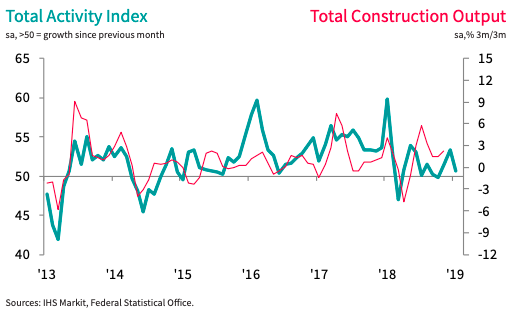
The EUR/USD currency pair suffered only marginally during the afternoon session Wednesday after Germany’s construction PMI slipped to 50.7 during the month of January, from 53.3 in December, largely owing to the renewed decline in commercial activity, which fell to the greatest extent in almost six years following modest growth in November and December.
New order growth was robust but also eased, as did the rates of increase in employment and constructors' buying levels. Despite the slowdown, constructors remained confident about the prospect of activity rising in the next 12 months.
On the cost front, constructors faced steep and accelerated rises in both sub-contractor rates and average purchase prices, with the latter reportedly driven up by increased energy costs and road toll charges. In addition, housing activity increased at a much slower rate than in December.
Civil engineering was the only area of construction that began the year on a stronger footing, recording a rise in activity for the first time in three months. German constructors recorded a further increase in lead-times on purchased items in January.
Though still substantial by historic standards, the deterioration in vendor performance was the least marked since April last year.
Looking ahead, constructors reported optimism towards the outlook for activity over the next 12 months, citing backlogs of work and hopes for new projects. The degree of confidence was at a six-month high, although well below the record levels seen in early-2018.
"Trying to unravel these distortions is difficult, but if we look at three-month moving averages to try to smooth fluctuations caused by any potential weather effects, then we see that the trend rates of growth for total activity, new orders and employment have all improved, albeit remaining below the highs in 2018. Alongside a rise in business confidence, this paints a fairly positive picture," said Phil Smith, Principal Economist at IHS Markit.
Meanwhile, at the time of writing, EUR/USD traded 0.14 percent lower at 1.1388.







