


 Solana User Growth Jumps 33%, Outpacing Ethereum and Chainlink
  DogecoinVM Makes DOGE Transactions 300x Faster
  Bitcoin Price Falls Below $83K as Liquidations Hit $697M
  US Government Moves $1 Billion in Bitcoin Amid Sale Speculation
  Zcash Privacy Demand Rises as AI Exposes Bitcoin Transactions
  U.S. Government Moves Over $100M in Bitcoin and BNB
  Evernorth XRPN Nasdaq Listing Delayed to October 12
  Robinhood Buys $25 Million in Bitcoin for Corporate Treasury
  Dogecoin Liquidations Surge as DOGE Bulls Face Heavy Losses
  Ethereum Price Drops Below $2,600 as Long Liquidations Hit 4-Month High
  Circle Stock Falls 4% as Crypto Selloff Overshadows SAP Pay Expansion
  Litecoin Marks 15 Years as Grayscale Backs LTC ETF Push


 Add as a preferred source on Google
Latest data from China's National Bureau of Statistics show that while surplus rose to record in Renminbi terms and highest since February in Dollar terms, it came in the back of significant weakness in imports. Weak imports from China exposes many economies in Asia to greater economic uncertainty.
- Latest data reveals that Chinese imports slowed down by -17.7% in September from a year ago, while exports declined by -1.1% for the same period. It has pushed trade surplus to $60.34 billion, highest since February.
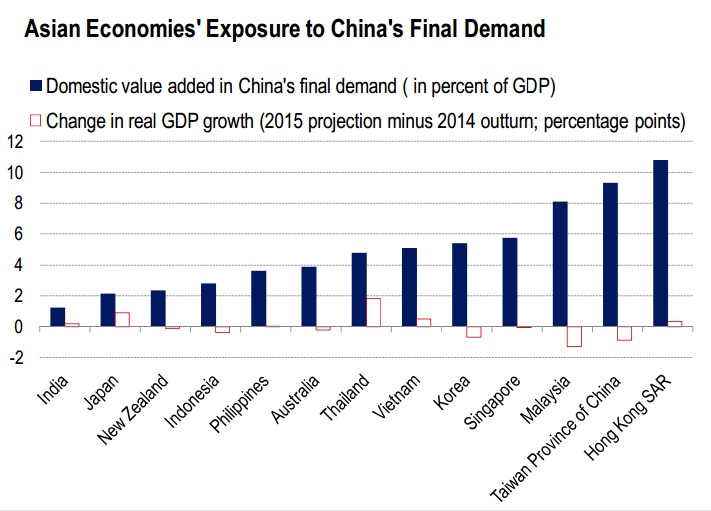
The figure from IMF shows that many economies in Asia have significant exposure to China, in terms of exports and with China's imports drying down there could be greater slowdown across emerging Asia.
Countries like Hong Kong, Taiwan, Malaysia have very high exposure followed by Singapore, South Korea, Vietnam, and Thailand, while countries like India has much smaller exposure in terms of Chinese imports.
While some market participants might cheer this record Renminbi surplus, things doesn't seem to be that bright with high exposure to Chinese economy.
Asian currencies, along with commodity currencies like Aussie, Kiwi have taken hit over the release.







