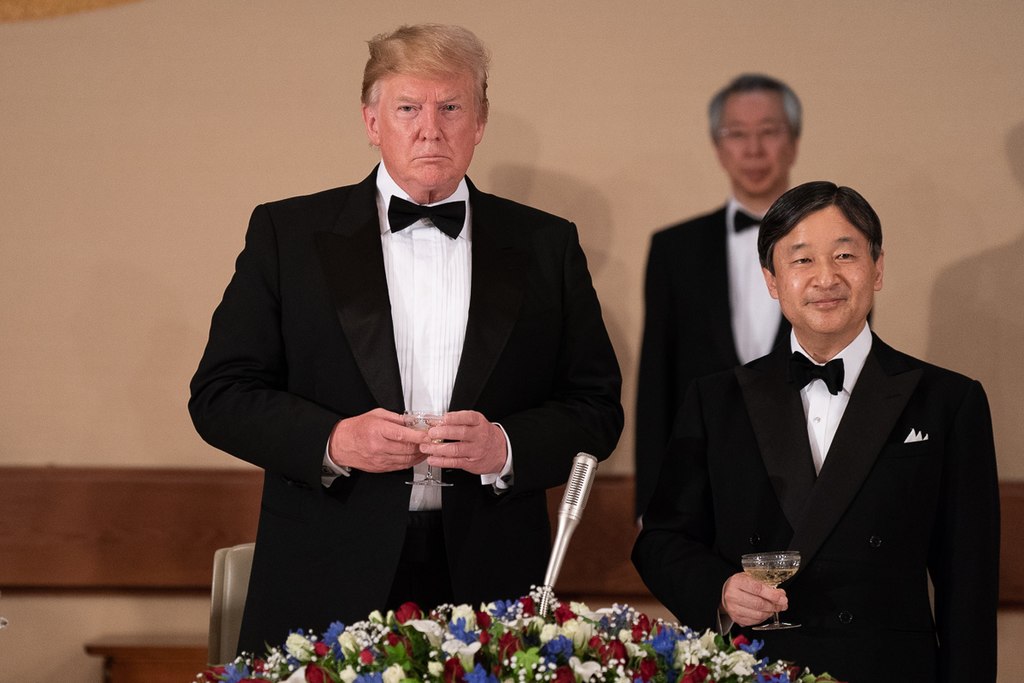
U.S. President Donald Trump will meet Emperor Naruhito at Tokyo’s Imperial Palace on Monday, marking their first encounter since Trump’s previous presidency six years ago. The meeting renews global attention on Japan’s revered monarchy, the world’s oldest hereditary institution.
Emperor Naruhito ascended the Chrysanthemum Throne in 2019 after his father, Emperor Emeritus Akihito, abdicated—Japan’s first imperial abdication in over 200 years. Naruhito, now 65, and Empress Masako, 61, both Oxford alumni, represent a new generation of the imperial family known for education, diplomacy, and compassion. They attended Queen Elizabeth II’s funeral in 2022, highlighting Japan’s enduring ties with the West.
Akihito, born in 1933, was celebrated for his efforts to reconcile Japan with its Asian neighbors and redefine the monarchy as a symbol of peace. Alongside Empress Emerita Michiko, he brought the royal family closer to ordinary citizens, moving away from rigid tradition. Naruhito’s grandfather, Emperor Hirohito (posthumously Emperor Showa), reigned during World War II and renounced his divine status after Japan’s 1945 defeat, establishing the emperor as a national symbol under Japan’s U.S.-drafted constitution.
Japan’s Imperial Household remains strictly male-only in succession. Though Princess Aiko, Naruhito’s only child, is admired by the public, she cannot inherit the throne. The line of succession passes to Naruhito’s brother, Crown Prince Akishino, and his son, Prince Hisahito. Akishino’s daughter, former Princess Mako, gave up her royal status upon marrying commoner Kei Komuro in 2019; the couple now lives in New York, where Komuro practices law.
While the emperor’s role today is largely ceremonial, Japan’s monarchy continues to embody centuries of culture and national identity. Emperor Naruhito’s reign reflects a careful balance between preserving sacred traditions and adapting to a modern, globalized Japan.