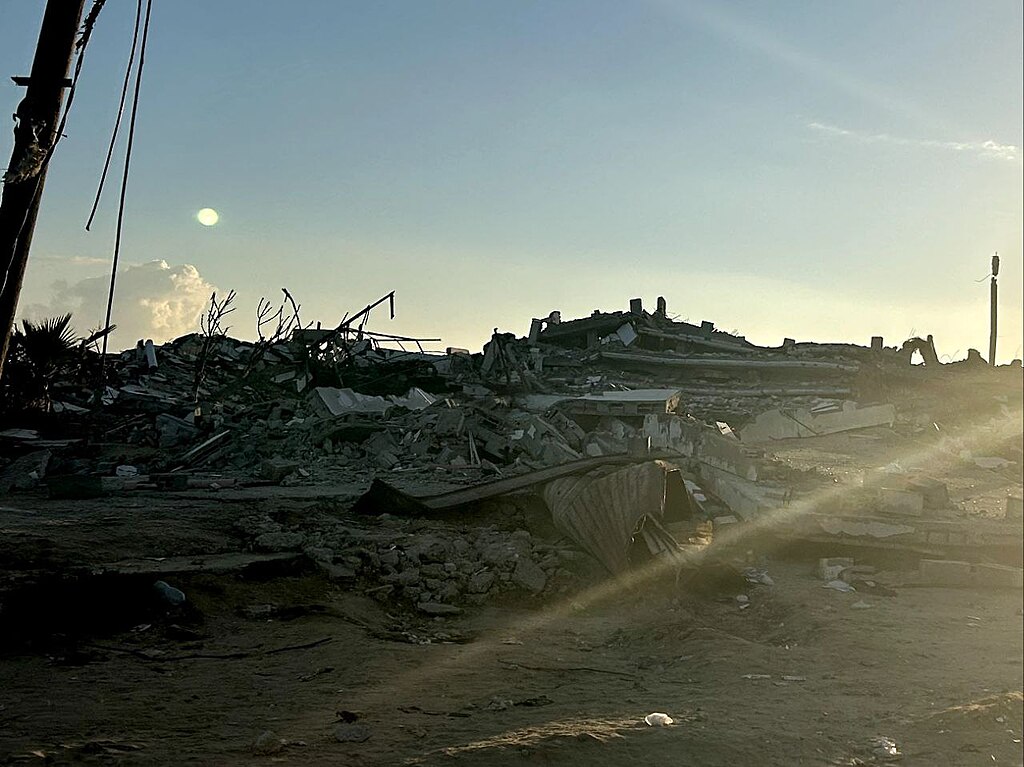
The United Arab Emirates is considering plans to build a large temporary housing complex for displaced Palestinians in southern Gaza, according to a planning map reviewed by Reuters and sources familiar with the initiative. The proposed site, referred to as the “UAE Temporary Emirates Housing Complex,” would be located near Rafah, a city close to the Egyptian border that has been almost entirely destroyed during the war and is currently under Israeli military control.
Rafah is expected to play a key role in Gaza’s reconstruction under a U.S.-backed framework promoted by President Donald Trump, which aims to establish a durable peace following nearly two years of conflict. However, international donors have been hesitant to commit funding, citing concerns that unresolved disputes over the disarmament of Hamas could trigger renewed fighting.
According to diplomats briefed on the matter, the UAE project would be part of a broader U.S.-led effort to stabilize Gaza through the creation of planned or alternative safe communities in Israeli-controlled areas. The housing complex would be built near the “yellow line” established under an October ceasefire, which separates Israeli- and Hamas-controlled zones. Emirati officials have reportedly shared details of the plan with U.S. counterparts as part of a multinational mission coordinated from southern Israel.
An Emirati official declined to confirm the project but stated that the UAE remains committed to expanding humanitarian assistance for Palestinians in Gaza. Sources say the initiative aligns with Washington’s strategy of encouraging civilians to move away from Hamas-run areas, potentially weakening the group by reducing its access to the population. U.S. officials have described this approach as a way to build momentum toward Hamas’ disarmament.
Despite these intentions, diplomats have raised doubts about the political and practical viability of the plan. Many Palestinians may be unwilling to relocate to Israeli-controlled zones, especially when the majority of Gaza’s two million residents remain in Hamas-administered areas. There are also concerns that such projects could entrench a long-term division of the territory.
Israel currently controls roughly 53% of Gaza, including the devastated Rafah area, while Hamas governs the remainder, where most civilians are sheltering in overcrowded camps and damaged neighborhoods. Aid workers and foreign diplomats argue that humanitarian assistance should prioritize areas with the largest displaced populations, noting that only an estimated 20,000 Palestinians are living in Israeli-controlled parts of Gaza.