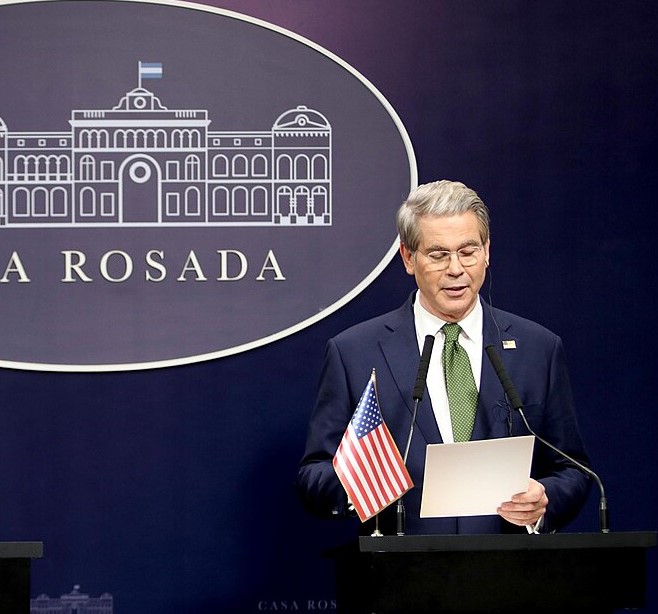
U.S. Treasury Secretary Scott Bessent said on Thursday that the possibility of additional U.S. sanctions against Russia will depend largely on the progress of ongoing peace talks aimed at ending the nearly four-year-long war in Ukraine. His remarks signal that economic pressure remains a key lever in Washington’s diplomatic strategy, even as negotiations continue behind the scenes.
Speaking during a Senate Banking Committee hearing, Bessent noted that the Trump administration is actively evaluating whether to impose new sanctions on Russia’s so-called “shadow fleet,” a network of vessels believed to be used to evade existing restrictions on Russian oil exports. Since President Donald Trump returned to office in January 2025, the United States has not yet sanctioned this fleet, but Bessent made clear that the option remains on the table. “I will take it under consideration. We will see where the peace talks go,” he said, tying any further action directly to diplomatic developments.
Bessent recently participated in discussions in Miami with Russian officials, alongside Trump’s special envoy Steve Witkoff and Trump’s son-in-law, Jared Kushner. According to Bessent, Kushner is believed to be acting as a special envoy and an intermediary in the Russia-Ukraine talks, despite not holding a formal government position. This involvement has drawn criticism from some lawmakers, with Democratic Senator Andy Kim warning that the participation of Trump family members could raise potential conflicts of interest.
The Treasury secretary also emphasized that existing U.S. sanctions have already had a tangible impact. He said sanctions targeting major Russian oil companies, including Rosneft and Lukoil, have played a role in pushing Moscow toward negotiations. These measures, aimed at curbing Russia’s energy revenues, remain central to U.S. efforts to influence the Kremlin’s calculations as the conflict drags on.
As the Ukraine war approaches its fourth year, investors, policymakers, and global energy markets are closely watching whether the United States will escalate sanctions or pivot toward a deal-driven resolution. Bessent’s comments underscore that sanctions policy will remain closely aligned with the trajectory of peace talks, keeping both economic pressure and diplomacy firmly in play.