
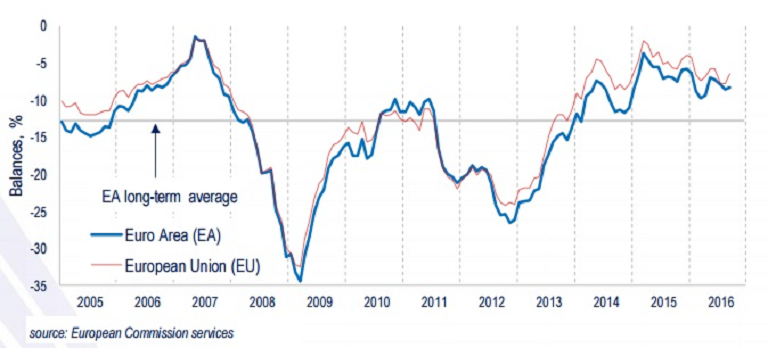
Consumer confidence in the eurozone improved slightly during the month of September, remaining well above the long-run average. Also, given recent trends in employment and a very accommodative policy by the European Central Bank, there will be further concerns that sentiment should be at stronger levels.
The flash reading for Eurozone consumer confidence improved slightly to -8.2 for September from 8.5 in August, while there was a stronger recovery to -6.4 from -7.7 for the European Union as a whole, preliminary data released by the European Commission showed Thursday.
In addition, confidence also remains above the levels seen late in the first quarter of 2016, but below the recent peak at -4 seen in the second quarter of 2015. The index has never been in positive territory since its inception in 2005.
Meanwhile, there will be concerns revolving around weak economic growth , coupled with a lack of confidence for the eurozone outlook. Although the impact of the European Union referendum seems to have faded out, worries still throng the minds regarding other political disturbances in the zone.
Overall, readings stronger than -5 will be needed to boost optimism in a stronger overall spending environment and a shift to more robust growth conditions, reports said.

