


 Oil Prices Rise as Hormuz Attacks Fuel Supply Fears
  BofA Raises Coinbase Stock Target to $203 on Stablecoin Growth
  US Dollar Hits 18-Month High as Fed Signals More Rate Hikes
  BOJ Raises Interest Rate to 31-Year High as Yen Weakens
  Fed Unveils Stablecoin Rules Under GENIUS Act
  Bangladesh GDP Growth Accelerates to 4.6% on Industrial Rebound
  DogecoinVM Makes DOGE Transactions 300x Faster
  RBA Says ASX Still Falls Short on Governance and Risk Controls
  Mike Rogers Calls for End to US-Canada Tariff War
  Kalshi Withdraws PEPE Perpetual Futures Filing
  Evernorth XRPN Nasdaq Listing Delayed to October 12
  China Shuts 670 Banks as Bitcoin Eyes Financial Risks
  Cardano Price Surges 10% as ADA Targets $0.30


 Add as a preferred source on Google
Data released by Eurostat’s earlier on Wednesday showed that Eurozone inflation stayed decidedly flat in August, rising just 0.2 percent in the August month, missing analysts' expectations of a rise to 0.3 percent. The more important core inflation which strips out energy and food slipped for the first time in three months to 0.8 percent from 0.9 percent in July. A separate release showed euro-area unemployment remained unchanged at 10.1 percent.
Today's inflation report follows European Commission survey on Tuesday which showed declines in economic confidence declined across most euro area countries. August inflation figures suggest there is plenty of slack in the Eurozone economy and coupled with unchanged unemployment numbers suggest that wage pressures will remain subdued. The International Monetary Fund has already cut its forecast for euro-area growth next year, and the European Central Bank will release new projections after its meeting next week.
Despite massive stimulus measures from the central bank, which included large-scale asset purchases, negative interest rates and long-term loans that see banks getting paid for extending credit to companies and households, inflation still remains far below the ECB’s goal. The ECB will remain uneasy surrounding inflation trends with the headline rate still substantially below the target rate.
“Today’s data are a small negative surprise and highlight once more the ECB’s difficulties in reaching its goal,” said Holger Sandte, chief European analyst at Nordea Markets in Copenhagen. “It suggests that the ECB isn’t yet done.”
Low inflation rates will inevitably be a key focus at next week’s European Central Bank (ECB) policy meeting. The weaker-than-expected inflation data could mean the ECB is forced to move. That said, while the ECB has indicated that interest rates could possibly go lower, there is clearly heightened concern over the impact that negative/low interest rates are having on Eurozone banks.
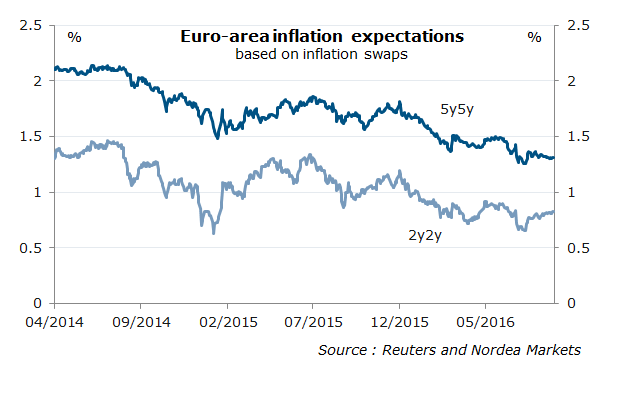
"As inflation expectations are still far below the ECB’s 2%-target, we think that the ECB is not done easing monetary policy. Given that policy rates are already so low, the main focus will be on asset purchases. QE for longer, announced, as we see it, in December rather than next week. Later this week, we will publish our ECB preview for the policy meeting on 8 September." Nordea bank said in a report.
There was little immediate market reaction to the data with EUR/USD holding just below 1.1150. The German 10-year bund yields continued to hover between -0.05 percent to -0.10 percent mark Wednesday as markets look to be holding steady ahead of ECB monetary policy meeting scheduled next week.







