


 ECB May Stop Rate Hikes After December, Capital Economics Says
  Asian Currencies Weaken as Dollar, Oil Prices Rise
  Trump Eyes $54 Billion South Korean Investment in Alaska LNG
  XRP Price Targets $1.70 as Bullish Momentum Builds
  UK Housebuilder Stocks Surge on New First-Time Buyer Loan Scheme
  Oil Prices Slide as Middle East Flows Recover
  BlackRock’s Rick Rieder Favors Bonds Over Stocks as Treasury Yields Surge
  Asian Stocks Fall as Bond Yields and Oil Prices Surge
  US Dollar Hits Two-Month High as Aussie, Pound Slide
  Gold Holds Near Seven-Week Low as Fed Rate Hike Bets Rise
  Asian Stocks Rise as Bond Yields Ease Ahead of U.S. Inflation Data
  BOJ Set to Raise Rates to 1.25% as Inflation Risks Build
  Japan Factory Output Unexpectedly Falls 1.7% in August
  Yen in Focus as BOJ, Fed Rate Hikes Reshape Currency Markets


 Add as a preferred source on Google
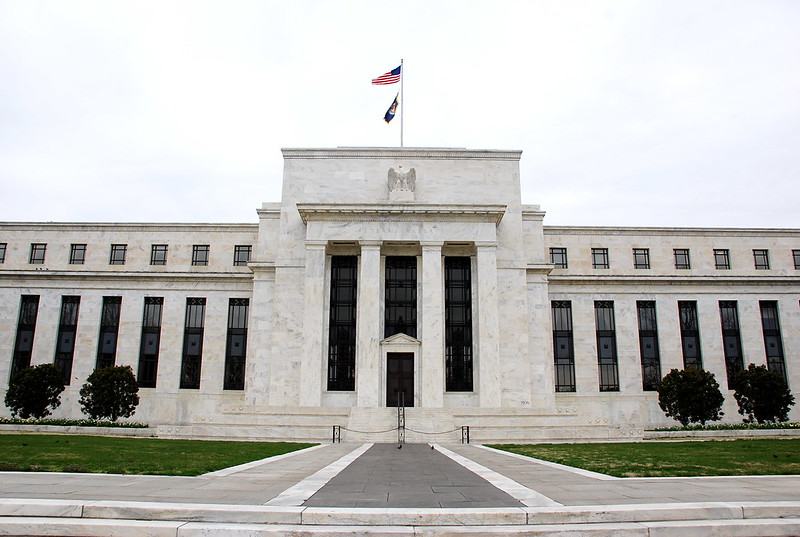
The U.S. Federal Reserve left interest rates unchanged at 4.25%-4.5% on Wednesday, but two Fed governors, Michelle Bowman and Christopher Waller, broke ranks, calling for a 25 basis-point cut. This marks the first double dissent since 1993 and signals growing division within the central bank on future monetary policy.
Chair Jerome Powell acknowledged differing views, emphasizing that while labor market demand is easing, declining labor supply—partly due to immigration restrictions—keeps unemployment low. He cautioned that weakening labor indicators must be viewed alongside supply dynamics rather than in isolation.
Despite pressure from President Donald Trump for rate cuts, Powell maintained a cautious stance, citing lingering uncertainty around tariffs. While recent trade deals with Japan and the EU reduced some risks, negotiations with China remain unresolved, leaving the economic outlook unclear.
U.S. GDP grew 3% in Q2, beating forecasts despite tariff impacts, while inflation remains above the Fed’s 2% target but well below last year’s 4.2%. Powell stressed that “maximum employment” supports holding a modestly restrictive policy for now.
Financial markets showed muted reactions, with equities and the dollar steady and Treasury yields flat. Attention now shifts to the Jackson Hole symposium in August, where Powell is expected to provide clearer signals on policy direction. Analysts warn that continued dissent could expose deeper rifts within the Fed if more members break from Powell’s approach in coming months.
This rare double dissent highlights the central bank’s internal debate over balancing inflation risks with signs of labor market softening, keeping investors closely watching upcoming data for clues on whether future rate cuts will materialize.







