Finland formally joined the NATO military alliance this week in a major shift to its military non-alignment stance. Finland’s accession follows the ratification of its bid by Turkey and Hungary, with Sweden’s membership still pending.
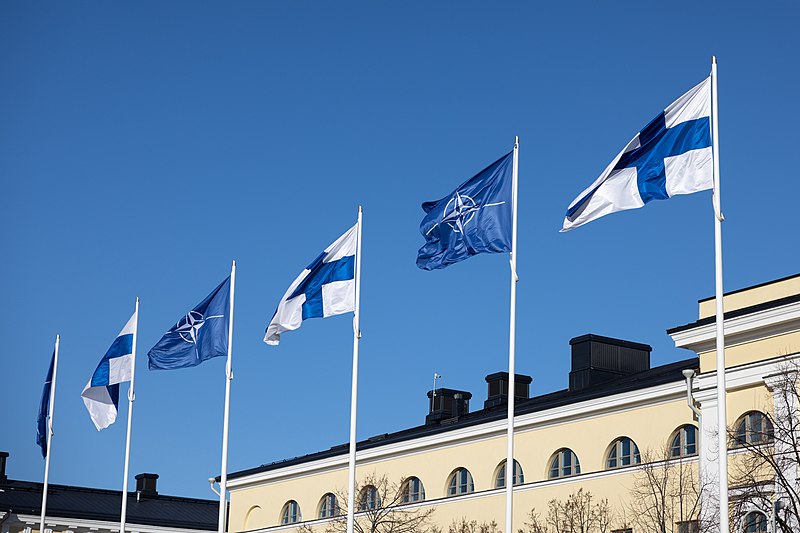
On Tuesday, Finland formally joined the NATO alliance, its flag flying outside the grouping’s headquarters in Brussels as the 31st country to join. Helsinki’s accession to NATO marks an end to decades of military non-alignment and would increase the length of the border the alliance shares with Russia. Finland’s accession would also bolster NATO’s eastern flank.
“For almost 75 years, this great alliance has shielded our nations and continues to do so today,” said NATO Secretary General Jens Stoltenberg at the ceremony. “But war has returned to Europe and Finland has decided to join NATO and be part of the world’s most successful alliance.”
Stoltenberg also said that Russian leader Vladimir Putin’s opposition to NATO’s eastern expansion was a justification for invading Ukraine, which has also expressed ambitions to join the alliance.
“He is getting exactly the opposite…Finland today, and soon also Sweden will become a full-fledged member of the alliance,” said Stoltenberg.
Finnish President Sauli Niinisto said Finland’s significant contribution to NATO’s common deterrence and defense would be the defense of its own territory. Niinisto added that there is still work to be done to coordinate with NATO.
Finland jointly applied for NATO membership with Sweden last year as a result of Russia’s invasion of Ukraine. Sweden’s NATO membership has been held up by Turkey and Hungary, the only two countries left that have also expressed their reservations. Swedish foreign minister Tobias Billstrom told reporters that Stockholm hopes to become a NATO member during the alliance’s summit in July.
Ankara has accused Sweden of harboring members of what it deems to be terrorist groups and demanded their extradition. Sweden has denied the allegations. Hungary has cited grievances over Sweden’s criticism of Hungarian Prime Minister Viktor Orban’s track record on democracy and the rule of law.
With Finland officially part of the alliance, Reuters reported that the accession was widely welcomed by Finns who live close to the country’s border with Russia as well as in Helsinki. Some Finns said that the accession made them feel more secure and that it would increase Finland’s security despite constant threats from Russia against joining.