Finland is set to become the latest country to join the NATO military alliance this week following the ratification of its membership by the 30 member countries. The Nordic country’s accession also marks a major shift in its security policy, as Sweden is still in the process of having its membership ratified.
NATO Secretary-General Jens Stoltenberg told reporters on Monday that Finland’s formal accession into the alliance will be on Tuesday, with a flag-raising ceremony at NATO headquarters in Brussels. Finnish President Sauli Niinisto and other government ministers will be in attendance at the event, which would make Finland the 31st member of the alliance.
“We will raise the Finnish flag for the first time here at NATO headquarters. It will be a good day for Finland’s security, for Nordic security, and for NATO as a whole,” said Stoltenberg.
Finland jointly applied for NATO membership with Sweden last year as a result of Russia’s invasion of Ukraine. However, the two countries ran into objections from Turkey, which has accused Sweden of harboring members of what it considers to be terrorist groups. Turkey, as well as Hungary, ratified Finland’s membership last week, holding up Sweden’s.
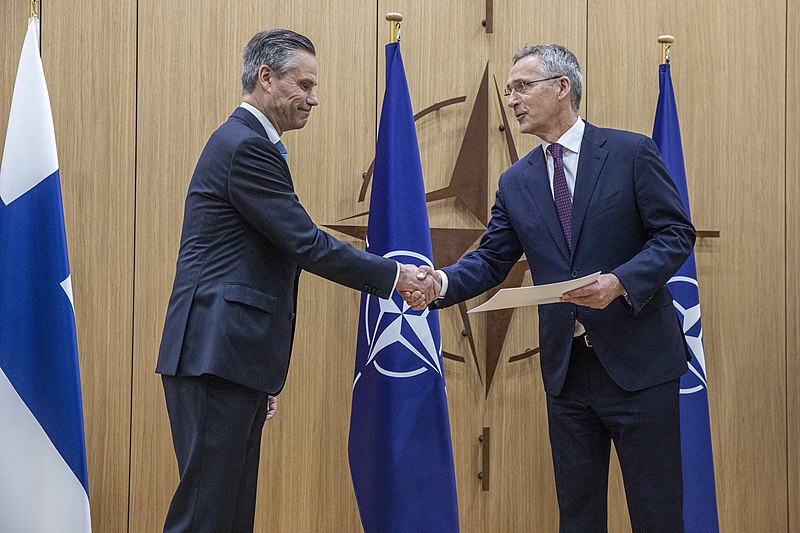
The final formal step on Finland’s accession would be when Finnish foreign minister Pekka Haavisto hands Finland’s accession document to US government officials in Brussels.
With Finland joining NATO, it would double the length of the border that NATO now shares with Russia. Moscow has since reacted to Finland’s accession by announcing that it intends to strengthen its military capacity in its western and northwestern regions.
Before formally joining the NATO alliance, Finland’s armed forces had already been leaning towards NATO, as the Finnish defense forces said that NATO surveillance flights by the United States and other allies had already started in Finnish airspace.
Friday last week, The Sun news outlet reported that European Commission President Ursula von der Leyen is a contender to succeed Stoltenberg to lead NATO, citing a diplomatic source. The report added that a number of NATO countries have suggested von der Leyen to take over the alliance when Stoltenberg ends his term in October.
However, the United Kingdom appears likely to veto von der Leyen, who previously served as Germany’s defense minister. Aside from von der Leyen, Germany’s Welt am Sonntag reported that Spanish Prime Minister Pedro Sanches and British defense secretary Ben Wallace were also contenders.