
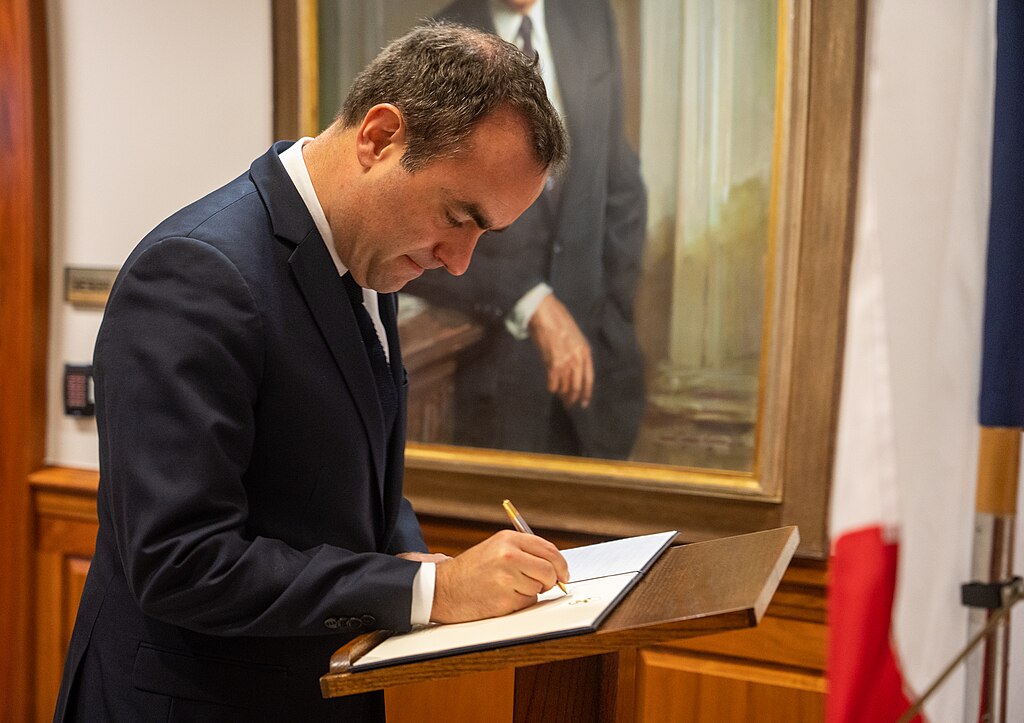
French Prime Minister Sebastien Lecornu faces mounting pressure to form a new government before Monday’s crucial budget deadline, as political divisions deepen within France’s conservative Les Republicains (LR) party. The reappointed leader must present a draft budget bill to cabinet and parliament amid one of France’s most turbulent political moments in decades.
Internal rifts have shaken the LR party, whose executive body declared that “the trust and conditions are not in place” to join Lecornu’s cabinet. However, many LR lawmakers reportedly favor accepting ministerial roles to influence the national budget, according to Le Monde. The tension underscores the fragile alliances Lecornu must navigate to secure support for his government.
Former Prime Minister Michel Barnier, a key LR figure, has laid out firm conditions for participation—chief among them the maintenance of President Emmanuel Macron’s pension reform, which raised the retirement age to 64. Barnier insisted that LR’s support depends on commitments to deficit reduction, pension reform, security, and competitiveness. His stance clashes with left-wing parties, who demand the reform’s suspension.
Socialist leader Olivier Faure warned that his party would move to topple the government unless the pension reform is scrapped. Meanwhile, centrist UDI expressed conditional support without joining the cabinet, and Macron’s ally Horizons refused to back any government that upholds the pension law.
Lecornu hinted at possible compromise, saying “all debates are possible as long as they are realistic.” He must now craft a credible plan to reduce France’s budget deficit from 5.4% of GDP this year to around 4.7%-5% in 2025. Failure to form a cabinet or secure parliamentary backing could force France into temporary emergency spending measures, echoing last year’s political stalemate.
With just hours remaining, Lecornu’s promise of a “renewal and diversity” cabinet remains unfulfilled—leaving France’s political future hanging in the balance.


