


 U.S. Banks Report Strong Q4 Profits Amid Investment Banking Surge
  Crypto Derivatives Dashboard: Bulls Retain Control Amid $488M Liquidation Flush
  NEAR Price Surges 11% as Trading Volume Doubles
  Urban studies: Doing research when every city is different
  Gold Prices Fall Amid Rate Jitters; Copper Steady as China Stimulus Eyed
  UNCX Network Hack Drains $86K From Ethereum Token Pool
  S&P 500 Relies on Tech for Growth in Q4 2024, Says Barclays
  U.S. Stocks vs. Bonds: Are Diverging Valuations Signaling a Shift?
  Gold Prices Slide as Rate Cut Prospects Diminish; Copper Gains on China Stimulus Hopes
  Binance to Shut Down Crypto Mining Pool Services on November 10
  Oil Prices Dip Slightly Amid Focus on Russian Sanctions and U.S. Inflation Data
  Global Markets React to Strong U.S. Jobs Data and Rising Yields
  European Stocks Rally on Chinese Growth and Mining Merger Speculation
  Solana Alpenglow Upgrade Set for October 21: What It Means for SOL
  Monero Price Holds $515 Support as XMR Eyes $545 Breakout
  Goldman Predicts 50% Odds of 10% U.S. Tariff on Copper by Q1 Close
  Wall Street Analysts Weigh in on Latest NFP Data


 Add as a preferred source on Google
The resolution of uncertainty after last week's referendum opens the door for a relief rally in the short term, but medium term concerns remain; stay MW TRY in the GBI-EM Model Portfolio. The Turkish referendum last weekend was in line with our expectations. The package of constitutional amendments was approved by a weak “yes” (51.4% approval vs 48.6% reject, according to the latest available data from unofficial results).
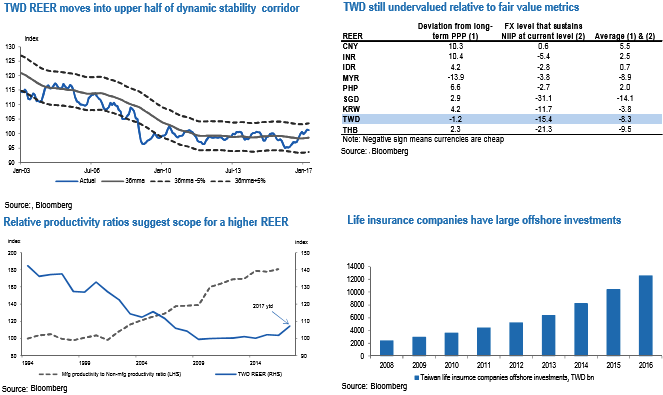
Despite TWD’s outperformance (+6% in spot terms and close to 4% in NEER terms year to date), the currency is still undervalued based on our preferred metrics (refer above figure). The ratio of productivity in the manufacturing to nonmanufacturing sectors is also supportive of higher levels of the REER (refer above figure).
FX markets: For well over a decade, Taiwan’s REER has traded in the lower half of the so-called ‘dynamic stability corridor’ (description of the corridor below, refer above figure).
Insurance companies to potentially adjust hedges on offshore investments another potential source of support for the TWD could come from the hedging behavior of local life insurance companies.
It was reported at the end of last week that the financial regulator in Taiwan had asked local insurers to adjust their FX hedging to reduce the impact of the firmer TWD. The allocation towards offshore investments has risen rapidly over the past decade (refer above figure).
At the end of 2016, offshore investments stood at just below USD400bn, of which around 70% is believed to be hedged.







