


 China Bank Lending Rebounds in September, Beats Forecasts
  Zelenskiy Says Ukraine Received No Warning Before Russian Missile Attack
  Wells Fargo Expands Stablecoin Plans With 20 Major Banks
  Netflix Cuts 1,000 Jobs as Streaming Giant Restructures
  Bank of America Fined $1.21B as CZ Questions AML Double Standard
  Jordan Bardella Antisemitism Allegations Threaten Le Pen’s Campaign
  Philippines Current Account Deficit Seen at $19.1 Billion in 2026
  Fed’s Williams Sees One More Rate Hike in 2026, None in 2027
  Gold Prices Rebound as Dollar Weakens Ahead of US Inflation Data
  US Condemns China Sanctions on Taiwan Allies Belize and Paraguay
  Asian Currencies Steady as Dollar Nears 18-Month High Ahead of US CPI
  IMF Warns US Debt Crisis Needs Fiscal Action, Urges China to Boost Consumption
  Trump Announces Massive Oil and Mineral Exploration Plans in Greenland
  UN Urges Talks on Lebanon Peacekeeping Mission Extension
  Trezor Cuts Reseller Network After Ledger Security Breach
  Oil Prices Fall as Russia Signals Higher Diesel Exports


 Add as a preferred source on Google
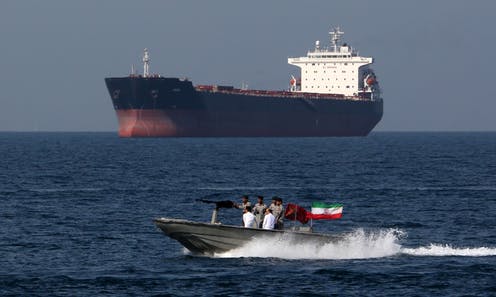
A Singapore-registered container ship sank in the Strait of Hormuz on Wednesday after being hit by an unidentified projectile, triggering a fire and raising fresh concerns over maritime security and global oil shipments.
The vessel, identified as GFS Pride, went down following the attack. Singapore's Maritime and Port Authority confirmed that all 21 crew members were successfully evacuated, with no injuries reported.
The maritime authority condemned the incident, describing attacks on commercial shipping as "unprovoked, unjustifiable and a breach of international law."
Iran's Revolutionary Guard claimed earlier Wednesday that a container ship had exploded and sunk after striking a naval mine, according to Iranian state news agency Tasnim. However, maritime security company Marisks said there was no independent evidence establishing that a mine caused the GFS Pride to sink.
Marisks suggested that Iran's statements could be part of a broader psychological campaign intended to heighten uncertainty, discourage commercial shipping and increase fears surrounding navigation through the strategically important waterway.
The sinking comes amid escalating Iranian attacks on commercial vessels in the Strait of Hormuz, a critical passage for global crude oil exports.
According to reports from the United Kingdom Maritime Trade Operations Centre, more than 20 ships, primarily oil tankers, have been targeted this month across the Strait of Hormuz, Persian Gulf and Gulf of Oman.
The International Maritime Organization reported that the attacks have left two sailors missing and 12 others injured.
The worsening security situation has also disrupted oil transportation through the region. Although crude oil shipments through Hormuz recovered to prewar levels in September with assistance from U.S. military escorts, exports have since declined as maritime attacks intensified.
Data from energy analytics firm Kpler showed that crude oil exports through the strait averaged 8.5 million barrels per day during the week ending October 12, nearly 40% below normal prewar volumes.
Meanwhile, total regional crude shipments, including exports transported through pipelines connecting to the Gulf of Oman and Red Sea, reached approximately 14 million barrels per day, almost 20% below prewar levels.
The continued disruption threatens global energy supply chains, with rising shipping risks potentially adding pressure to crude oil prices and international trade.







