


 Gold Prices Rise as Hormuz Tensions Fuel Inflation Risks
  Wall Street Falls as Fed Minutes Signal Another Rate Hike
  Fed Minutes Signal Another Rate Hike by Year-End
  Trump Calls for Zelenskyy Replacement Amid Russian Diesel Deal
  Oil Prices Rise as Gulf Hurricane and Middle East Supply Risks Mount
  US Dollar Rises for Fourth Week as Fed Rate Hike Bets Grow
  France to Release 10 Million Barrels of Diesel to Ease Fuel Prices
  Gold Prices Fall Amid Rate Jitters; Copper Steady as China Stimulus Eyed
  Deere, CNH and AGCO Stocks Fall as FTC Launches Farm Equipment Probe


 Add as a preferred source on Google
The German labour market is expected to continue to defy the recession in the manufacturing sector, according to the latest research report from Commerzbank.
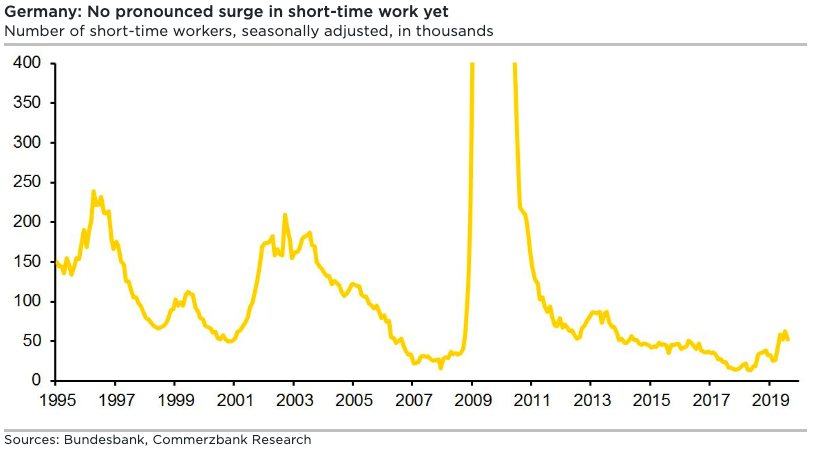
Working time accounts that are full to the brim and generous regulations on short-time workers' pay constitute effective buffers that prevented a slump in employment even in the severe recession of 2009.
All of this is a counterweight to a bursting of the globalisation bubble, from which the German export industry will suffer for a long time to come.
German industrial production has been contracting for almost two years. This manufacturing recession caused German GDP to decline somewhat in the second, and probably also in the third, quarter.
Despite this, the German labour market is still in good shape - even in areas where companies are most likely to act in a downturn. Despite the recent increase in the number of short-time workers, their numbers are not significantly higher than the average of the past five years, at just over 50,000, the report added.
In addition, the number of reported job vacancies is still close to its all-time high of summer 2018, and the number of regular employees (those subject to social security contributions) has until recently continued to increase, albeit at a slower pace.
Meanwhile, the only clearly negative labour market indicator is the declining number of temporary workers, who are usually the first to be laid off in the event of an economic downturn. However, temporary work is only falling primarily because of regulatory measures that came into force in April 2017, Commerzbank further noted in the report.







