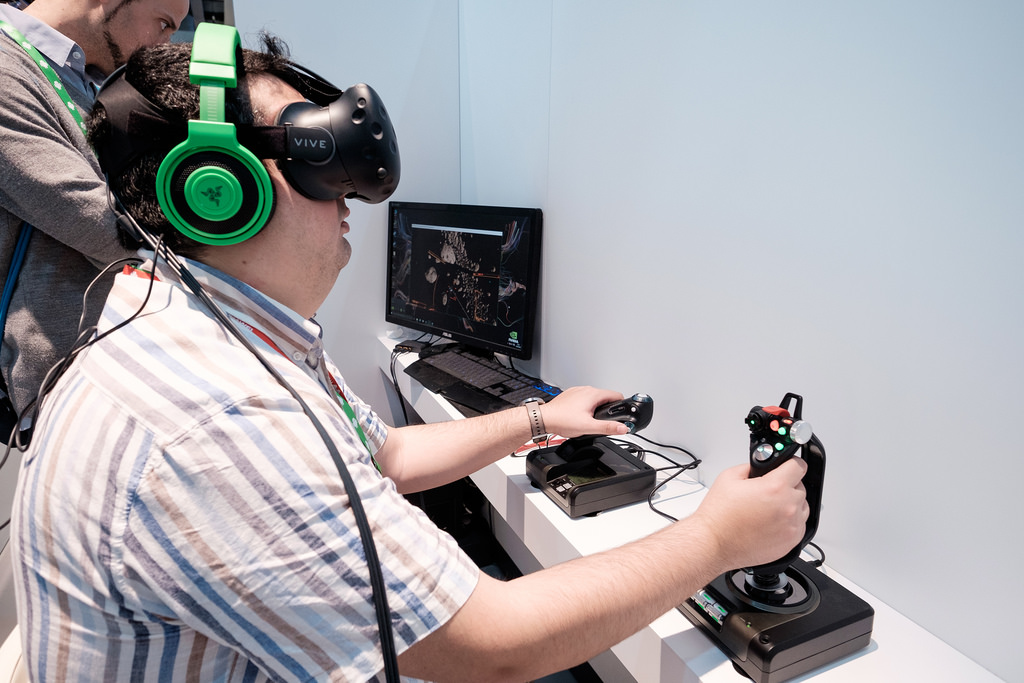
HTC, the company that created the virtual reality headset Vive, is promising to create VR arcades in several countries including the U.S. By allowing several of their games to have arcade licensing, they can potentially be brought over to internet cafes, movie theaters, or local restaurant/video game spots all over the country.
A VR arcade has been the dream of many techies and gamers for as long as the concept of virtual reality has existed. In a bid to push into the gaming territory that could be worth $100 million over a two-year period, HTC is planning to place arcade spots like the one it has in Taiwan called Viveland in the U.S., Europe, and China, according to the company’s official press release.
One of the most important assets to acquire in order to make the whole VR arcade thing work is Viveport Arcade. Anyone who wants to acquire VR games and make them playable on their VR arcades will need it for legal acquisition.
“Viveport Arcade will make it much easier for VR arcade operators to legally acquire the most compelling VR content available, while the system itself will allow both operators and developers to accurately share the revenue from end users,” the press release reads. “Pilot programs for Viveport Arcade have already been deployed in a number of locations in the last 1-2 months and will soon expand to hundreds of gaming centers, amusement parks and karaoke bars across China and globally.”
Aside from fulfilling long-existing dreams of nerds everywhere, establishing VR arcades is also considered one of the most prudent choices when it comes to making VR explode in popularity. As private entertainment gadgets, VR headsets are still incredibly expensive, The Verge reports. This is why several companies have found a way to make them into public spectacles instead.