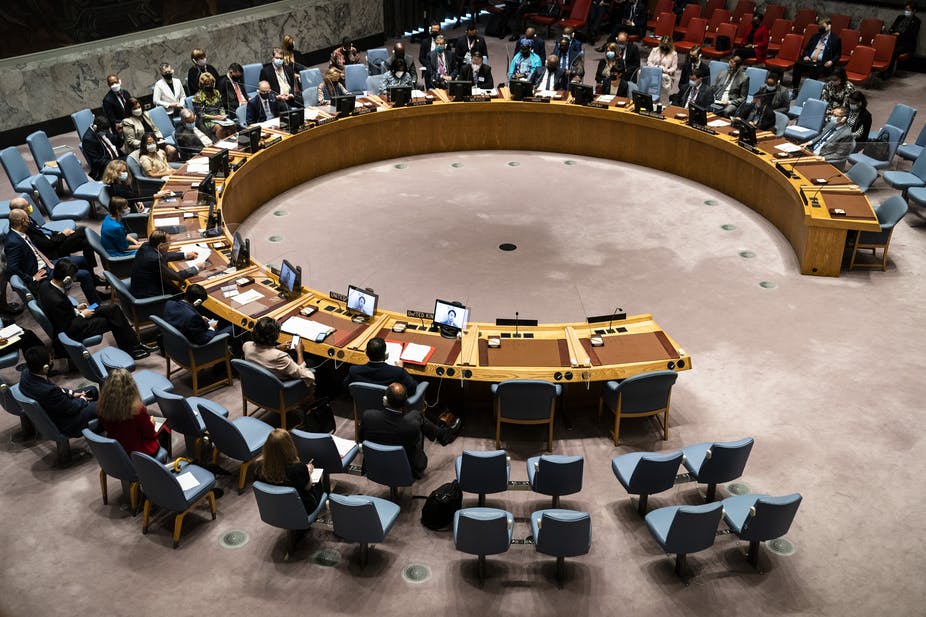
Hamas has strongly rejected the United Nations Security Council’s approval of a U.S.-drafted resolution supporting President Donald Trump’s proposed plan for Gaza, arguing that the measure undermines Palestinian rights and aims to impose an unwanted international administration over the enclave. According to the group, the resolution does not address core Palestinian demands and instead attempts to reshape Gaza’s governance in a way that aligns with Israeli interests.
In its statement, Hamas emphasized that the introduction of an international force inside Gaza—particularly one tasked with roles such as disarming resistance factions—compromises neutrality and effectively turns that force into a participant in the conflict. Hamas and other Palestinian resistance groups view these provisions as efforts to weaken their position and restrict their ability to defend Palestinian land and people. The group further warned that any attempt to enforce international trusteeship over Gaza contradicts the will of its residents and the broader Palestinian struggle for sovereignty.
The rejection highlights ongoing tensions surrounding international involvement in Gaza and the deep mistrust between Palestinian factions and external actors perceived as biased. Hamas argues that genuine progress requires respecting Palestinian self-determination, ending the occupation, and supporting a political process rooted in justice rather than imposed conditions. The group reiterated that any plan failing to uphold these principles will be rejected by Palestinians across Gaza and the wider region.
As global powers debate Gaza’s future, Hamas insists that lasting stability can only emerge from solutions crafted through direct dialogue with Palestinians, not through resolutions that appear to marginalize their voices. The group stressed that international legitimacy must stem from recognizing Palestinian rights, not from enforcing security arrangements that favor one side of the conflict.