


 TSMC Profit Set to Surge 65% as AI Chip Demand Drives Record Earnings
  OpenAI Annualized Revenue Hits $50 Billion, Below Earlier Estimates
  Arthur Hayes Announces FLOP Testnet Launch Within Weeks
  TSMC Q3 Revenue Beats Estimates as AI Chip Demand Surges
  Oracle Uses Trucked Natural Gas to Power AI Data Centers Amid Pipeline Delays
  Meta Launches Muse Wonder AI Models, Shares Rise 3.7%
  Elon Musk Eyes Semiconductor Manufacturing Expansion With $15 Billion Terrafab Project
  US Suspends Microsoft, Adobe From Green Card Program
  Amazon in Talks to Acquire AI Startup Decart for $7 Billion
  Tencent Shares Fall as $5 Billion AI Bond Sale Weighed
  Apple Cuts iPhone 18 Pro Production Orders Amid Weak Demand
  Samsung, SK Hynix Shares Fall as China's CXMT Advances DRAM Technology
  Moonshot AI Executives Seek Settlement Ahead of Hong Kong IPO
  Apple Names Steve Smith M&A Chief in Leadership Shakeup
  Yandex Data Center Hit by Drone Strike as Russia-Ukraine Cyber Infrastructure Attacks Escalate
  Apple Supplier Luxshare Sees Limited Impact From US Patent Probe
  OpenAI Revenue Hits $50 Billion, Below Earlier $70 Billion Estimate


 Add as a preferred source on Google
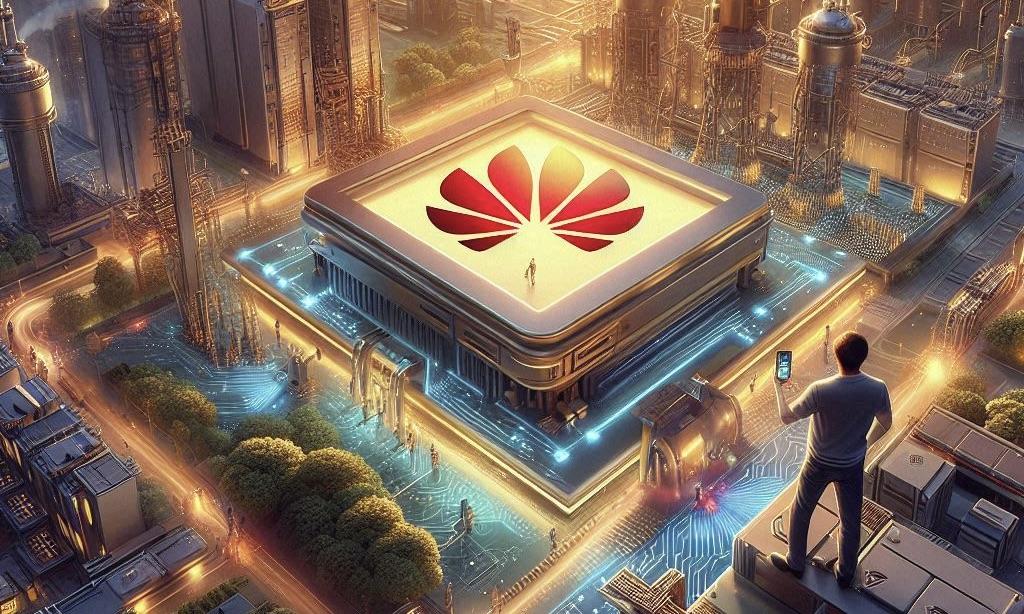
Huawei has invested $1.66 billion in a new R&D facility near Shanghai to develop advanced chipmaking tools. This effort aims to achieve self-sufficiency amid U.S. trade restrictions, highlighting Huawei's innovation and determination.
Huawei and SMIC Advance 5nm Chip Development, Investing in R&D to Overcome EUV Restrictions
SMIC, and Huawei have jointly made significant strides in developing the 5nm process for future chipsets. However, as a Chinese company, Huawei faces a technological barrier if it relies solely on existing DUV machinery. To overcome this, Huawei is investing substantially in an R&D facility to produce advanced machinery comparable to leading companies, as it cannot obtain cutting-edge EUV chipmaking tools from companies such as ASML.
Huawei's unwavering pursuit of self-sufficiency stands as a testament to its resilience in the face of the U.S. trade embargo, which has significantly limited the company's access to advanced chipmaking tools.
According to Wccftech, this journey, though challenging, is being met with a spirit of innovation and determination. According to Nikkei, a new R&D center is being constructed near Shanghai, with the primary objective of creating competitive chipmaking tools with the machinery manufactured by ASML, Canon, and Nikon. Huawei's foundry partners, SMIC and Hua Hong, are also facing restrictions in acquiring tools that enable them to manufacture circuits using the 14nm FinFET and 16nm FinFET processes.
Huawei Invests $1.66 Billion in R&D Facility, Emphasizes Local Talent to Boost Self-Sufficiency
Despite the challenges, Huawei is making significant strides in its self-sufficiency journey. The company has invested a substantial ¥12 billion, or $1.66 billion, to date in the R&D facility, a testament to its commitment. This facility, upon completion, will be a colossal structure, covering an area equivalent to 224 football fields and housing over 35,000 employees. Huawei's attractive compensation packages are designed to attract the most talented semiconductor professionals, underscoring the company's unwavering commitment to its self-sufficiency journey.
Huawei's commitment to its local community is evident in its efforts to recruit local talent. As only some Chinese companies can recruit U.S. citizens who are green card holders, Huawei is compelled to focus on local talent. This commitment to the local community is a crucial part of Huawei's strategy, and it is this strategy that will help preserve its winning trend on its home ground, at least in the interim.
Photo: Microsoft Bing







