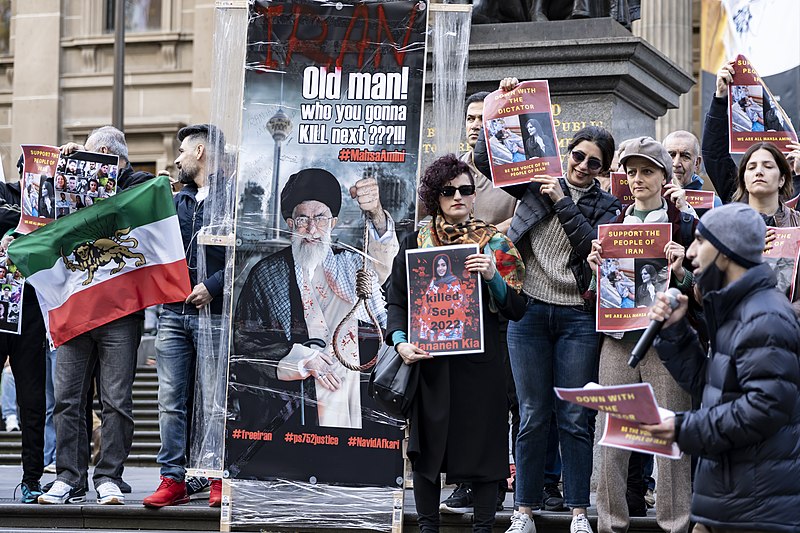
Iran has been plagued by widespread anti-government protests in recent weeks following the death of a woman in the custody of its Morality Police. The country’s security forces have since ramped up their crackdown on the demonstrations, even as workers in the oil sector are joining in on the protests.
Iran’s security forces ramped up their crackdown on the protests Monday in cities in Iran’s Kurdish region amidst the protests spreading into the country’s energy sector, where workers are believed to be joining the protests.
Iran has been swept up in widespread demonstrations following the death of 22-year-old Mahsa Amini in the custody of the Morality Police last month. Amini was detained by the Morality Police over “inappropriate attire.”
University students played a big role in the ongoing demonstrations, while unconfirmed videos and reports circulating on social media showed workers from the Abadan and Kangan oil refineries, as well as the Bushehr Petrochemical Plant taking part in the protests.
To note, the protests and strikes by oil workers and Bazaar merchants played a major role in the 1979 revolution. Analysts say Tehran’s clerical leaders are likely going to contain the unrest for now, and that the possibility of a change in Iran’s political order is very slim.
The protests also come amidst long-running tensions between authorities and the Kurdish minority. Human rights groups say the Kurdish minority in Iran has long been oppressed by Tehran’s clerical leadership, which its leaders have denied.
According to the human rights group Hengaw, there was a heavy presence of security forces in the Kurdish cities of Sanandaj, Saqez, and Divandareh. At least five people were killed in the crackdown, and over 150 people were injured.
The Iranian journalist who first reported about Amini, Niloofar Hamedi, was also arrested by authorities days after Amini’s death in September.
“This morning, intelligence agents raided my client Niloofar Hamedi’s house, arrested her, searched her house, and confiscated her belongings,” tweeted Hamedi’s lawyer Mohammad Ali Kamfirouzi back on September 22. Kamfirouzi added that Hamedi has not been charged and is currently placed under solitary confinement in Iran’s Evin prison.
The Committee to Protect Journalists has since called on the authorities in Tehran to release all the journalists they have detained over their coverage of the unrest. Last month, the committee reported that 28 journalists, including Hamedi, were detained by Iran’s security forces.