James Cogline of Rankwisely was once asked the question in an interview and he said, “If we’re speaking in plain financial terms, then yes, there are businesses without risks.”
Well, guess what?
I completely agree with him. There are plenty of businesses with zero financial risks. E.g., dropshipping, affiliate marketing, and so on.
However, realistically, business risks aren’t limited to just ‘financial.’ As you’ll soon see, there are different kinds of business risks. And that’s why it’s almost impossible to find a business without risk.
Having said that, it bears mentioning that not all businesses come with ‘huge’ risks. There are so many ‘low risk, high reward’ businesses out there. Today, you’re going to learn all about them.
In this article, you will learn all about the risk businesses face.
A Shocker: Business risks isn’t always financial.
Types of business risks
The following are the different types of risks a business could face:
Economic risk
This type of risk is external, and it’s usually caused by changes in the economy. A business will thrive if the economic environment is in good shape. And vice versa if the reverse is the case.
Economic risks are not predictable and could happen at any time. Economic risk could arise if there are changes in market prices, demand and supply, inflation, and deflation. These changes will lead to reduced revenue, sales, and profits.
For example, any business can be affected by high inflation. When that happens, consumers won’t be able to afford your products/services.
Compliance Risk
Laws and regulations are created to guide and maintain order in every country's sector. From government to individuals, laws are designed to protect and maintain order.
Compliance risk is generally the outcome of penalties a business faces if it violates the laws. A business that fails to adhere to such regulations could face financial penalties like paying a fine. A company could even be shut down or have its owners serve a jail term depending on the gravity of the laws it has broken.
In the words of Catherine Soler of Likes.io, “A business can break all barriers but never the law.”
Security and Fraud Risk
This is one of the negatives of the internet age. People's identities are often stolen, or some are scammed of their money. Fraud risk can be internal and external.
Fraud risks are carried out due to the weakness in the company's security system. This risk includes embezzling company funds, hacking, and stealing proprietary information. This could leave the business in a bad situation, like losing its reputation or bankruptcy.
Financial Risk
Financial risk could arise due to market interest rates or market’s forced changes. Financial risk can also be the tendency for economic loss when investing or starting a business.
It is understandable for businesses to want more funds to expand. These funds could come from loans from financial institutions or individuals. A company could be at financial risk if it cannot repay this debt during the given timeline.
Reputational Risk
It takes a lot of years for a business to build its reputation from ground to top.
In the words of Katherine Luna of SeoservicesCanada, “it takes plenty of positive brand PR and SEO goodwill to build a startup’s reputation.”
So, you can understand why companies guard their reputation.
A company could lose its reputation if caught in situations like lousy customer service, fraud, and product problems. This can be improved using feedback, good customer experience, etc.
Operational risk
Both physical and natural factors can cause this type of risk. These factors include delayed shipments, accidents, and natural disasters like storms, hurricanes, etc. And this could affect the general operations of a business.
Companies can avoid this risk by developing a risk management strategy to ensure operations can continue even if these problems happen.
Competitive Risk
Finally, there’s competitive risk. The risk you face from having to compete with similar businesses for customers, prospects, suppliers, recruits, etc.
A very common competitive risk is related to duplication. Let's say, you are working in some kind of publication-related business, and you have to create and publish content on a regular basis. If your content matches that of your competitors it could open up multiple copy-right infringement issues, and the matter could even escalate to a lawsuit.
That’s why it is important for businesses to check all of their content for plagiarism by utilizing a plagiarism checker free of cost. These are tools that can detect duplication in text and they are much better than humans at finding it.
Plagiarism is just one example of a competitive risk and there exist many different types. Different competitive risks are associated with different businesses.
Now, you know the different business risks you may face when starting a business. It is time to talk about the different ‘zero-risk’ or ‘low-risk’ business ideas you can pick up.
Zero-risk and low-risk business examples
Freelance business
Post-pandemic, everybody is using their skill to make money online. No matter your skill set, be it graphics, writing, coding, copywriting, etc., you can offer your craft and get paid. This is one industry that has grown massively after the pandemic. Recent reports are even claiming that by 2027, the number of freelancers in the US alone may shoot up to 86.5 million people.
In this business model, earnings are based on the number of hours spent on clients’ projects - which is estimated using an hours tracker, or your level of experience. Also, the business can be done remotely from the comfort of your house.
Why is this a low-risk business?
The following are the reasons why it is a low-risk business you can venture into:
-
No Compliance Risk: To get started in this niche industry, you won't be faced with any form of laws or regulations aside from paying taxes. All that is required is to sign up on a website where you can trade your skills and get paid. The only things you might face are the terms and conditions that protect users on the website to ensure a quality experience for both parties.
-
No Security/Fraud Risk: Another reason this business is low risk is that nobody can steal your identity or defraud you of your earnings. The platforms where you work will have high-end security measures to prevent this. You also get paid immediately after the customer verifies the job.
-
No Financial Risk: You don’t need any pre-payment or downpayment or startup capital to begin this business. That means you’re safe on the money front. You have nothing to lose. Except maybe the little funds you spend to hone necessary skills and build your freelance portfolio. But even that is avoidable. With digital communities like Brightkeys announcing that they’re “offering free marketing and freelance materials,” you can hone relevant freelance skills without spending a dime.
Drop shipping business
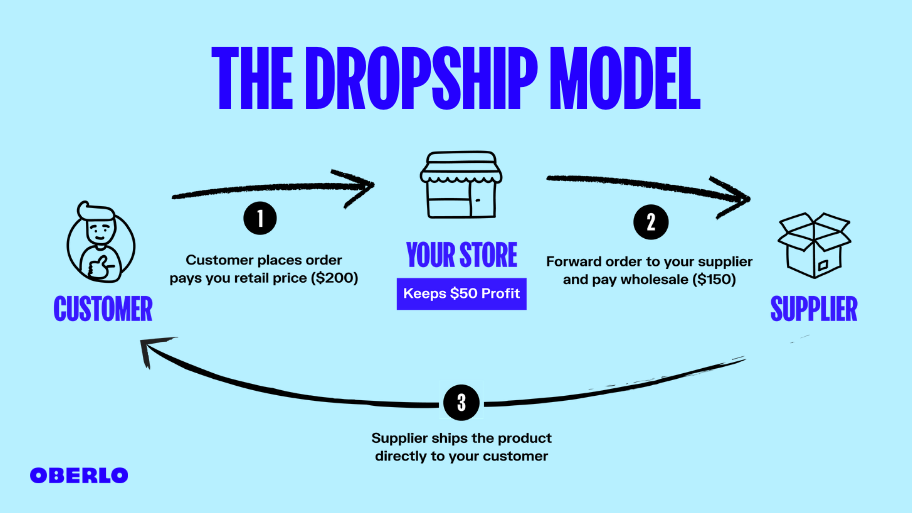
This is another business that doesn't require you to have any form of capital to start. The idea is to display goods – goods that belong to other people (supplier/manufacturer) – on a website or social platform. And then sell these goods for profit. In a nutshell, dropshipping business involves you acting as a third-party vendor in a retail chain.
According to the popular fashion blog, Searchmen, ‘dropshipping is one of the biggest blessings of Ecommerce and consumer satisfaction.

As you can see in the image above, customers order on your platform (website or social platform), then you forward the order to your vendor (supplier/manufacturer), including the supplier’s retail price (after taking out your cut). From there, the supplier delivers the goods to the customer’s doorstep. And everybody smiles after.
Sounds so easy, right? Yh, that’s why roughly 27% of online retailers are now dropshipping.
Why is this a low-risk business?
-
No operational Risk: You don't need to store the goods you sell. You are just a third party using your page to advertise the goods and make money. That means you won't be faced with any form of operational risk. The vendors are the ones to face such trouble. And as far as order management or customer satisfaction goes, you have tools like this client management software to bail you out.
-
No Financial Risk: Since you don't need to start with any tangible capital, you won't necessarily face any financial risk. You won't require having to collect loans to start the business.
-
No Security Risk: Security risk is not also a problem for this kind of business. Your job is to look for trustworthy vendors. For this business, you should use vendors like Amazon, Aliexpress, and eBay.
Photography business
At a recent industry expo, the CEO of Keep Going - an entrepreneurial blog - was asked what he thinks about photographers who go around snapping random strangers. And he said, “why would anyone have such skills and keep it locked somewhere.”
Indeed, photographers should monetize their skills in whatever way they see fit.
If you love taking pictures and capturing memories, why not venture into the photography business? You could learn good photography and editing online or attend an art school. Once you are done, you could go and open your studio. Better still, you can create a space for photography in your house.
See cost nothing, well, except paying for it online. Hold one, and there is YouTube!!!
Why is this a low-risk business?
-
No Economic Risk: The photography business has nothing to do with changes in market prices; all you are thinking about is capturing beautiful moments.
-
No Compliance Risk: No laws guide this business, so you don't have to worry about paying fines or life imprisonment.
-
No Security/Fraud Risk: It also has nothing to do with security or fraud risks.
-
No Financial Risk: You don't need much capital or loans to start this business.
-
No Operational Risk: You also have no business with natural disasters destroying your facilities.
-
No Competitive Risk: Every photographer is unique in their own rights. You aren’t in competition with anybody.
Event planning business
Have you ever hosted a party before? If yes, you can start your own event planning business. You can help plan hangouts, trade fairs, and birthday parties. Interestingly, you don't need any cash to start.
Why is this a low-risk business?
-
No Security/Fraud Risk: The event planning business has nothing to do with identity theft. You are just planning events for people to enjoy themselves. All you have to do is register your business so nobody uses your business name to scam people.
-
No Financial Risk: You don’t need any capital to start.
Personal training business
If you are a fitness enthusiast, you can make a business from it by training people and helping them get fit. You can teach them in their homes, in the gym, or virtually. It is a business that is easy to set up.
Why is this a low-risk business?
-
Zero economic risk, changes in price doesn't affect your business.
-
You may not need to worry about operational risk as you can run a virtual setup.
-
You don't have to bother about the embezzlement of funds as you are the business's sole owner.
Service business
Another business you could venture into is that of service providing. There are tons of services and business ventures you can pick up and build. You can decide to offer plumbing, cratering, barbing, dog walking, and even electrical services depending on your skill set.
Why is this a low-risk business?
-
Zero operational risk since you wouldn’t require a physical space. You can decide to open a business page on social media, and people can order services from there.
-
Services don't need significant capital to start. All you need is to get the necessary tools that you will need for your business. And you have a vehicle you can use to move around.
Consultancy business
Whatever your qualifications, background, and experience, someone or a business out there needs the expert advice and insights that only someone with your particular mix of qualifications, background, and experience can offer. You could be experienced in content marketing and decide to help businesses with their content strategy.
Why is this a low-risk business?
-
You don't need to have an office space. For this kind of business, a website and business card will do.
-
You are solely in charge of the business and won't be faced with any delays or not meeting up with set deadlines.
-
You can decide on the number of jobs you are willing to work and number of client meetings you are willing to take.
Affiliate marketing business
You can set up a business in the affiliate market by advertising products of e-commerce business on your website and social media platform. The more sales they make from that product advert on your website, the more money you get.
Why is this a low-risk business?
-
You don't need much cost to start this business. Just a website/social platform will do.
You don't have to worry about reputation risks as you are just advertising for a business on your social platform. Do you know even charities have their affiliate programs too!
This article does not necessarily reflect the opinions of the editors or management of EconoTimes