Israel carried out some of its heaviest airstrikes on Gaza since the October ceasefire, killing more than 30 people on Saturday, according to Palestinian health officials. Among the dead were three young girls from the same family, as Israeli attacks hit residential houses, tent camps sheltering displaced civilians, and a police station. The escalation has raised fresh concerns about the fragility of the ceasefire and the possibility of a renewed Gaza war.
The Israeli military said the strikes were a response to an alleged ceasefire breach a day earlier, when Israeli troops identified eight armed fighters emerging from a tunnel in Rafah, a southern Gaza area currently under Israeli control as part of the truce. Israel stated that it targeted Hamas and Islamic Jihad commanders, weapons storage facilities, and arms manufacturing sites. Hamas rejected Israel’s claims, accusing it of violating the ceasefire, but did not confirm whether any of its fighters or facilities were hit.
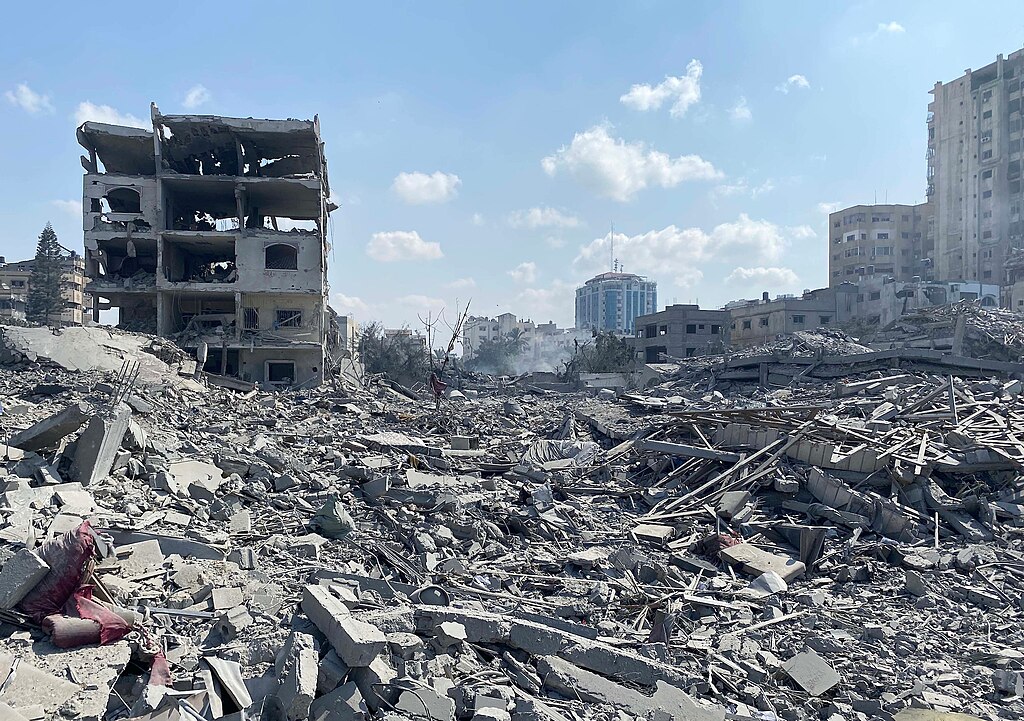
In Gaza City, Israeli warplanes bombed the Sheikh Radwan police station, killing 13 people, including five police officers, according to Hamas-run police and civil defense officials. Additional airstrikes hit homes in northern and central Gaza, as well as a tent encampment for displaced families in Khan Younis. Video footage showed extensive destruction, with blackened walls, scattered debris, and collapsed structures. Relatives reported finding the bodies of children in the streets, highlighting the civilian toll of the attacks.
Despite the ceasefire, violence has continued. Gaza officials say more than 500 people, mostly civilians, have been killed by Israeli fire since the truce began, while Israel reports that Palestinian militants have killed four Israeli soldiers. Both sides have blamed each other for violations as the United States pushes forward a multi-phase plan, backed by President Donald Trump, to end the conflict permanently.
Israel is expected to reopen the Rafah border crossing with Egypt, while negotiations continue over key issues such as Hamas disarmament, Israeli troop withdrawals, and the possible deployment of an international peacekeeping force. The war began after the Hamas-led attack on southern Israel on October 7, 2023, and Israeli officials have warned that fighting could resume if Hamas refuses to lay down its weapons.