Israel announced that it has received a body from Hamas believed to be one of the last two deceased hostages still held in Gaza, marking a critical step in fulfilling the initial terms of U.S. President Donald Trump’s ceasefire and hostage-release plan. The body, transferred by the Red Cross, is undergoing forensic identification, according to the Israeli prime minister’s office. A previous set of remains handed over on Tuesday was determined not to belong to any hostage.
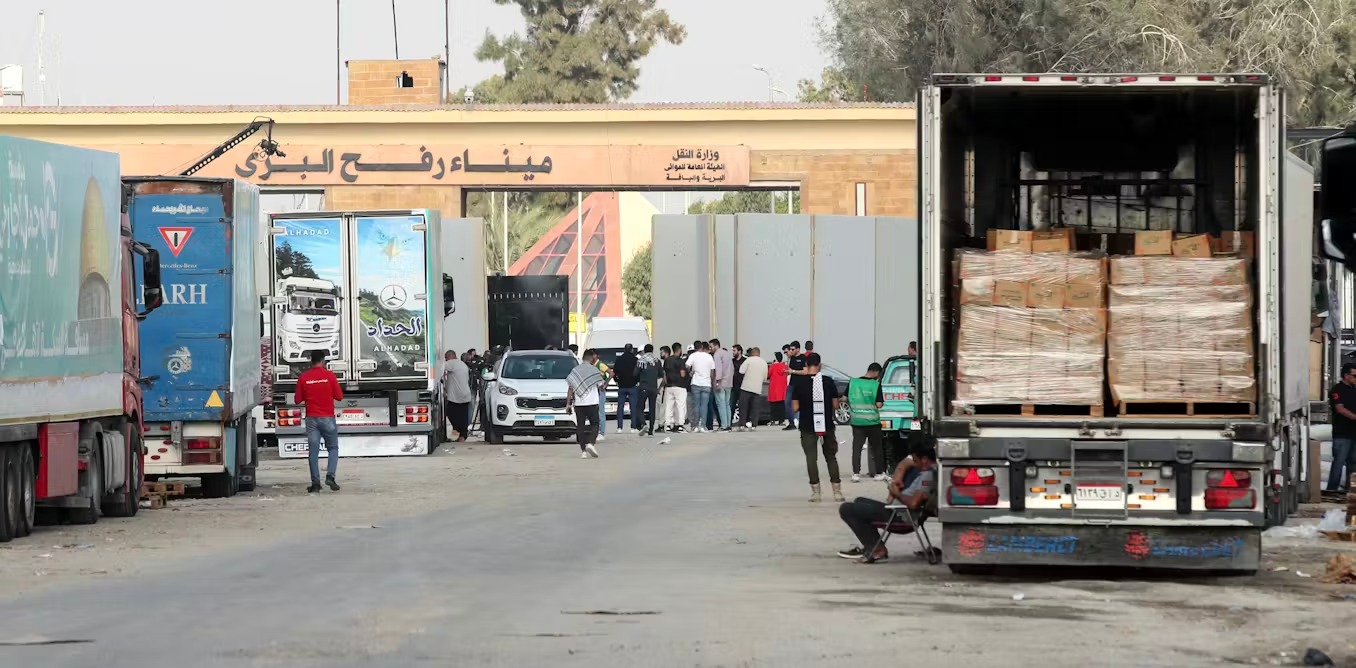
The return of the final bodies is a key requirement before Israel reopens the Rafah border crossing—Gaza’s main gateway to Egypt—which has remained closed since the ceasefire took effect in October. Government spokesperson Shosh Bedrosian stated that the crossing will reopen “when all of our hostages have been returned.” Since the beginning of the fragile truce, Hamas has returned 20 living hostages and 26 bodies in exchange for roughly 2,000 Palestinian detainees, but the remains of Israeli police officer Ran Gvili and Thai worker Sudthisak Rinthalak are still missing.
The Al Quds Brigades, the armed wing of Palestinian Islamic Jihad, said it located one body during a joint search with the Red Cross in northern Gaza. The groups did not specify which hostage they believe it to be. Once the crossing reopens, thousands of Palestinians in need of medical care outside the enclave may finally be able to travel. COGAT confirmed that the opening will be coordinated with mediators from Egypt, Qatar, and the U.S., and supervised by a European Union mission similar to one used during a January 2025 ceasefire.
Despite reduced violence since the October 10 ceasefire, Israeli airstrikes and clashes continue. Five Palestinians—including two children—were killed in Khan Younis after an Israeli strike targeting a Hamas operative. Additional fatalities were reported in Gaza City’s Zeitoun suburb. Gaza health authorities say more than 350 Palestinians have been killed since the truce began, while Palestinian militants have killed three Israeli soldiers in the same period.