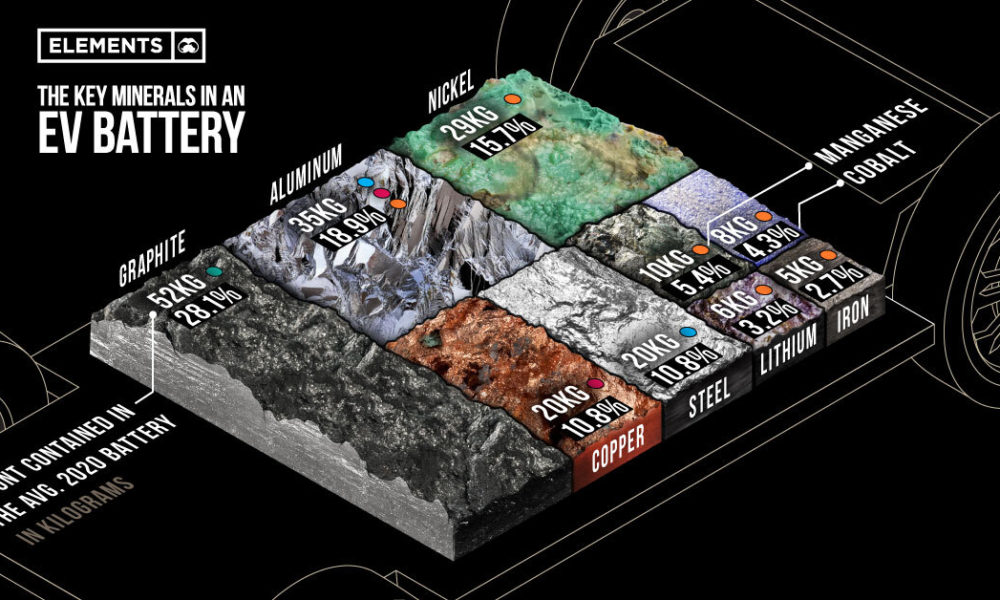
The United States and Japan have agreed on a trade deal to strengthen their battery supply chains and reduce their dependence on China on electric vehicle battery minerals.
The agreement will also give Japanese automakers easier access to the $7,500 US EV tax credit.
It also prohibits the two countries from enacting bilateral export restrictions on the minerals, including lithium, nickel, cobalt, graphite, and manganese, which are most critical for EV batteries.
US and Japan are collaborating to combat “non-market policies and practices” of other countries in the sector and on conducting investment reviews of foreign investments in their critical minerals supply chains.
Minerals-focused trade deals are one way the US will open access for trusted allies to the $7,500 per vehicle EV tax credits in last year’s climate-focused Inflation Reduction Act.
The two countries agreed to review the minerals agreement every two years, including whether it is appropriate to terminate or amend it.



How is Antarctica melting, exactly? Crucial details are beginning to come into focus
Lavrov Claims U.S. Seeks Control Over Damaged Nord Stream Pipelines
LA fires: Long-term exposure to wildfire smoke is poorly understood − and a growing risk
US Military Eyes 10,000 Troop Surge to Middle East Amid Iran Nuclear Tensions
Oil Prices Slip as Middle East Tensions Ease, Heading for Weekly Loss
Meta Ties Executive Pay to Aggressive Stock Price Targets in Major Retention Push
Israeli Airstrike Targets Building in Beirut's Southern Suburbs Amid Ongoing Hezbollah Conflict
Bank of Japan Unveils New Inflation Gauge to Support Case for Future Rate Hikes
What does China’s host bid mean for the High Seas Treaty?
Lynas Rare Earths Signs Vietnam Deal with LS Eco Energy to Boost Magnet Metal Production
Reflection AI Eyes $25 Billion Valuation in Massive $2.5 Billion Funding Round
OpenAI Pulls the Plug on Sora, Ending $1 Billion Disney Partnership
CK Hutchison's Panama Ports Dispute Escalates as Arbitration Claims Surpass $2 Billion
Swimming in the sweet spot: how marine animals save energy on long journeys
How to create a thriving forest, not box-checking ‘tree cover’ 


