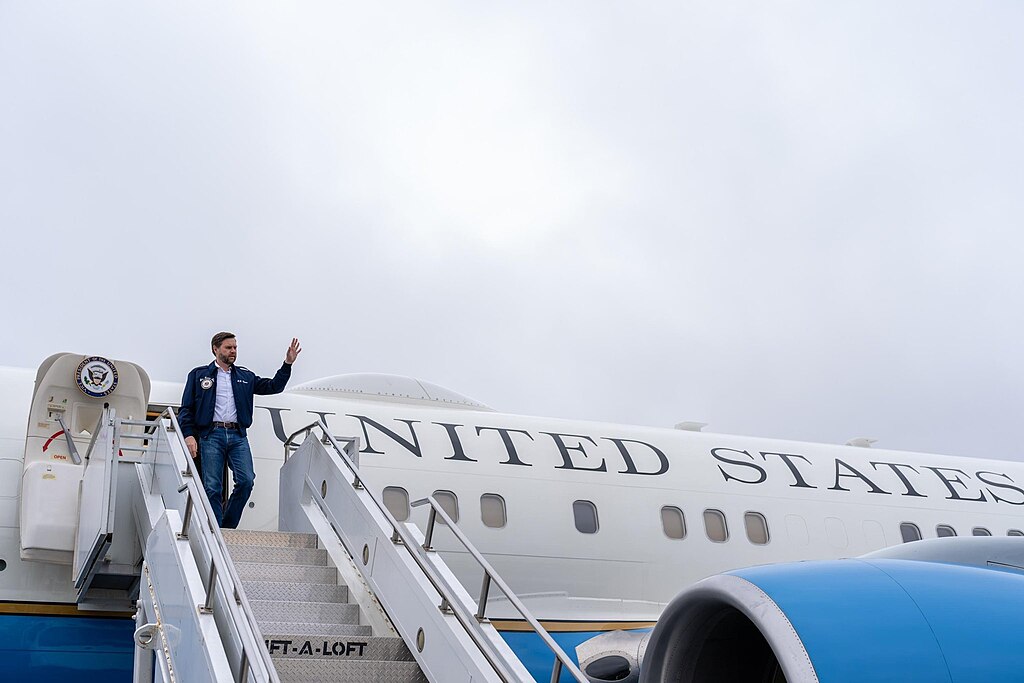
U.S. Vice President JD Vance said Britain has been "failed by its leadership for a long time," arguing that the country needs significant political reform as it prepares for another change in government. His remarks come after Prime Minister Keir Starmer announced he would step down after two years in office, opening the door for Britain’s seventh prime minister in just a decade.
Speaking in an interview with the Sunday Times, Vance said the rapid turnover of British leaders reflects deeper structural problems within the country's political system. He said voters are demanding lasting reforms rather than frequent leadership changes.
"What I see is six prime ministers in the last few years," Vance said. "That tells me something is very broken about British politics, and people are crying out for significant structural change."
Andy Burnham, who has emerged as the sole candidate to replace Starmer, is widely expected to become Britain’s next prime minister. Although Vance acknowledged he knows little about Burnham, he expressed hope that the incoming leader—or whoever ultimately assumes office—will be able to restore political stability and put the country back on track.
Despite his criticism of Britain's political landscape, Vance praised the United Kingdom, describing it as an "amazing place" with some of the "most amazing people in the world" outside the United States. His wife, Usha Vance, studied at the University of Cambridge, and the vice president has frequently spoken about his admiration for Britain.
Vance’s comments follow a sometimes challenging but generally cooperative relationship between President Donald Trump and Starmer. While the two leaders differed on issues including Iran, Gaza, and Ukraine, they consistently emphasized the importance of the long-standing U.S.-UK "special relationship" and worked together on trade and investment agreements.
After Starmer announced his resignation, Trump called him a "lovely man" and "a sort of friend of mine," while also criticizing his handling of immigration and energy policy. Trump has previously described Burnham as "extremely liberal" and suggested he would be less supportive of expanding North Sea oil and gas production.
Even so, Vance stressed that the United States would continue to work closely with Britain regardless of who becomes its next prime minister, reaffirming the UK's status as one of Washington's closest allies.