
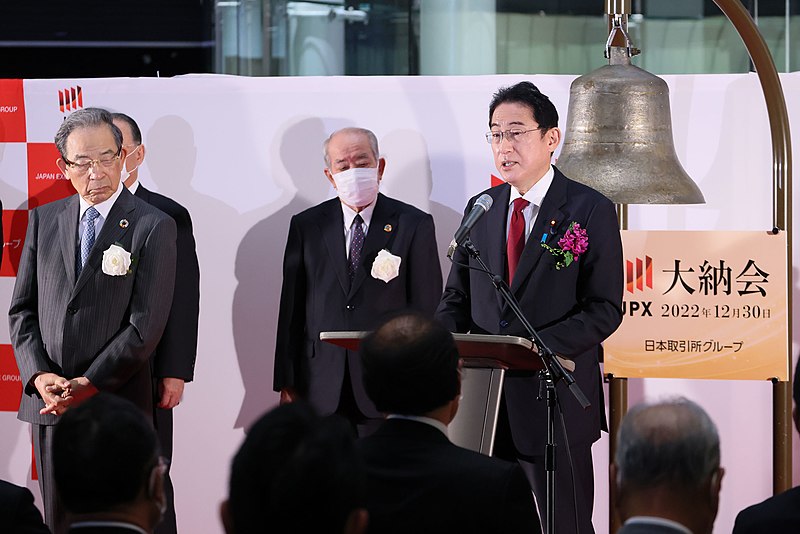
Japanese Prime Minister Fumio Kishida has begun his tour of the country’s Western partners this week following the unveiling of Japan’s largest military buildup in decades. The tour comes as Kishida is set to host a summit of his counterparts in the G7 countries in the coming months.
Kishida began his tour of G7 partners on Monday, ahead of the summit Tokyo is hosting in May as the group’s current chair. Kishida will be meeting with his counterparts in the United States, the United Kingdom, France, Canada, and Italy this week during his visit. The talks with the leaders are expected to be about the current tensions with China and North Korea, Russia’s invasion of Ukraine, economic security, and semiconductor chips.
“As leader of the G7 chair this year, I’ll be making this visit to reaffirm our thinking on a number of issues,” Kishida told a Sunday news program. “With the United States, we’ll discuss deepening our bilateral alliance and how to maintain a free and open Indo-Pacific.”
Kishida is visiting London and Rome after they agreed on the joint development of fighter jets last month. Kishida is set to sign a deal with the UK to establish a legal framework to allow visits by each other’s armed forces, according to the report by the Yomiuri news outlet on Friday last week.
In Kishida’s last stop at Washington, the discussions are expected to revolve around Japan’s military buildup to arm itself with missiles that can strike targets in North Korea or China, as well as the bilateral defense agreement and the efforts to limit China from accessing semiconductors.
With France as the first stop, French President Emmanuel Macron is expected to bring Kishida to the construction site of the Notre Dame cathedral Monday in an effort to boost relations between the two countries. This comes as France is seeking to boost its presence in the Indo-Pacific region and deepen economic ties with Japan.
A French presidential source said Paris is also looking to highlight how it can play a bigger role in Japan’s defense industry, much like its role in the civilian nuclear power sector.


