
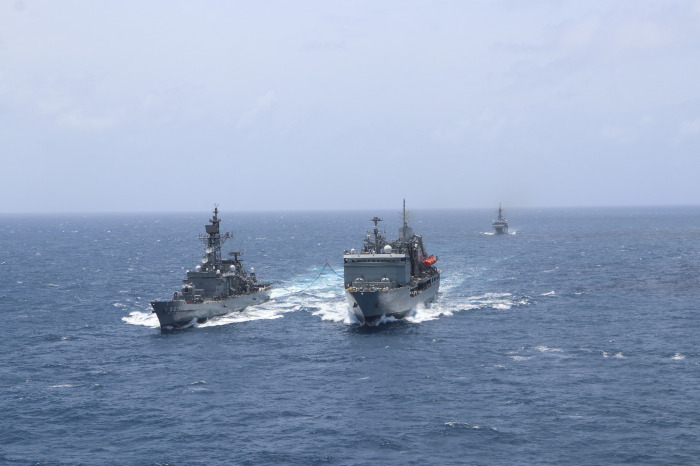
In light of tensions in the world, the Japanese government is looking to expand its military. A survey by a local news outlet found that the majority of the Japanese public has opposed increasing taxes for expanding the country’s military.
Japan’s Kyodo news agency reported on Sunday that the majority of the public is against tax hikes for the country’s military expansion. The outlet cited a survey it conducted following Tokyo’s announcement on Friday of investing $320 billion in military spending. In the survey, 65 percent of respondents opposed raising taxes, while 87 percent of the respondents said the reasons for expansion are inadequate.
The budget would help purchase missiles that are capable of striking China and prepare Japan for any conflict that may stem from North Korea, China’s claim over the island nation of Taiwan, and Russia’s invasion of Ukraine.
This month, Prime Minister Fumio Kishida said his government does not intend to raise taxes for the coming fiscal year starting April 1 but would raise taxes in stages moving toward the 2027 fiscal year in order to secure funding to boost the country’s defense budget. Kishida said Japan is at a “turning point in history” and that military expansion through tax increases and cost-cutting would be his “answer to the various security challenges that we face.”
The survey also showed that the support for Kishida’s government remained the same at 33.1 percent, the worst record since it was launched in October last year.
Based on the current budgets, the proposed tax plan would make Japan the third-biggest military spender, following the United States and China.
On Monday, Kishida announced his support for the African Union’s entry into the G20 group of countries. Kishida said the African Union’s addition to the G20 was important, noting the growing role the region is playing in the international community.
Kishida also agreed with Senegal on resource development cooperation and boosting investments by Japanese companies following a meeting with Senegalese President Macky Sall in Tokyo.
“We confirmed to build a further comprehensive relationship between Japan and Senegal,” Kishida told reporters during a joint press conference with Sall.


