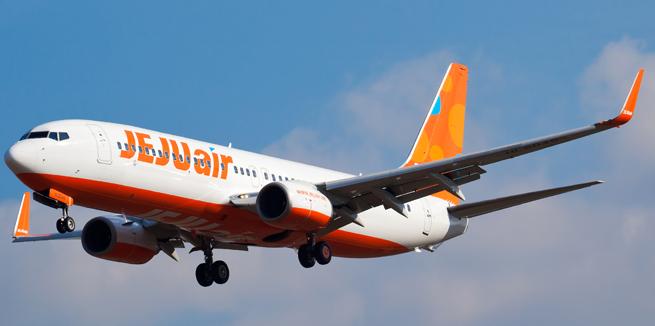
Jeju Air Co. is replacing aircraft brakes to lower aircraft weight and washing aircraft engines are among the measures to reduce carbon emissions.
South Korea's largest low-cost carrier announced Thursday that it had replaced the steel brakes on 24 planes with lightweight carbon fiber brakes, including four in 2019, five in 2020, 12 in 2021, and three in 2022.
Carbon brakes save around 320 kilos per aircraft as compared to steel brakes.
Carbon brakes can help reduce fuel weight by 11.52 kilos for a one-way trip between Gimpo and Jeju, resulting in 36.4 kilograms of carbon dioxide emissions.
Last year, Jeju Air was able to lower its fuel use by around 160 tons by operating 21 aircraft with new carbon brakes.
In addition, the corporation cut CO2 emissions by 505 tons last year and 154 tons in the first quarter of this year. Another plane will have an engine replacement this year.
Jeju Air also saves gasoline by cleaning their aircraft engines.
It has been washing its aircraft engines twice a year to remove extraneous contaminants from the engines and improve flight performance.