


 Gaza Olive Harvest Collapses as War Destroys Farmland
  Zelenskiy Says Ukraine Received No Warning Before Russian Missile Attack
  UN Urges Talks on Lebanon Peacekeeping Mission Extension
  Trump Announces Massive Oil and Mineral Exploration Plans in Greenland
  Trump Denies China, Russia Are Helping Iran in War
  Trump Denies Russia and China Are Helping Iran in U.S. Conflict
  Zelenskiy Says Trump’s Support for Russia Is ‘Painful’
  China Resumes US Soybean Purchases After Trump-Xi Summit
  Netanyahu Rejects Preemptive Iran Strike Ahead of Israel Election
  Kim Jong Un Showcases ICBM Ahead of Possible Trump Meeting
  Flavio Bolsonaro Backs Brazil’s 40-Hour Workweek Reform Ahead of Runoff
  US Senate Midterms 2026: Key Races That Could Flip Control
  Trump Confirms US Intelligence Sharing With Ukraine Amid Russian Strikes
  FBI Denies Report of Kash Patel’s Russia Visit
  MI5 Warns of Rising Iran, Russia Threats and AI Bioweapon Risks
  Elon Musk Donates $366 Million to 2026 US Midterms
  Most Americans Oppose Election Betting on Prediction Markets, Poll Finds


 Add as a preferred source on Google
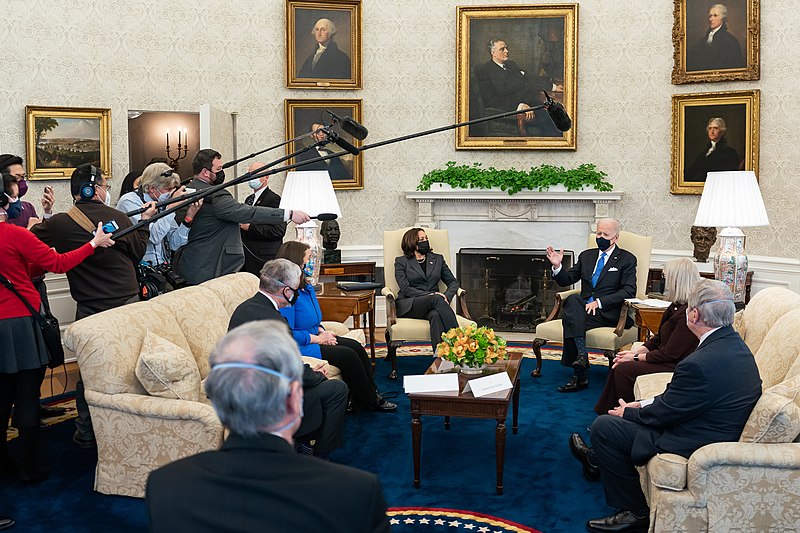
President Joe Biden is moving towards his next major legislative attempt following his successful COVID-19 relief proposal. This week, Biden unveiled the details of his massive $2 trillion infrastructure proposal.
In his visit to Pittsburgh, Pennsylvania, Biden unveiled his massive infrastructure plan called the “American Jobs Plan,” with a slightly higher price tag than the American Rescue Plan at $2 trillion. The entire proposal moves the US toward having a clean energy economy.
Most of this infrastructure plan would involve roads, bridges, and public transportation, but it also includes the expansion of long-term care for the elderly through Medicaid, a ban on exclusionary zoning, as well as investing in community-centered violence reduction programs, to name a few.
The $2 trillion in funds needed in this plan would be spaced out over eight years, which would be one percent of the US’s GDP per year over that time.
“It’s time to build our economy from the bottom up and the middle out,” said Biden in the union training center where he made the announcement, where he also stressed the need for more better-paying and union jobs. “Wall Street didn’t build this country; you, the middle class, built this country. And unions built the middle class.”
$621 billion from the $2 trillion would be allocated for infrastructure spending to rebuild the country’s bridges, ports, and rail systems. $300 billion would be spent on manufacturing, while $213 billion would be for affordable housing and an overall $380 billion for research and development that would modernize the country’s electricity grids and the installation of high-speed broadband. $400 billion would be allocated for home and community-based health and elderly care.
While most Americans have benefited from the $1.9 trillion COVID-19 relief plan that was passed several weeks ago, attorneys general from 13 states have filed a lawsuit against the Biden administration over a provision in the relief plan that prevents states from using relief money to offset tax cuts.
The lawsuit was filed in the district court of Alabama this week, asking judges to scrap the said provision. The restriction laid out on the bill could last until 2024.







