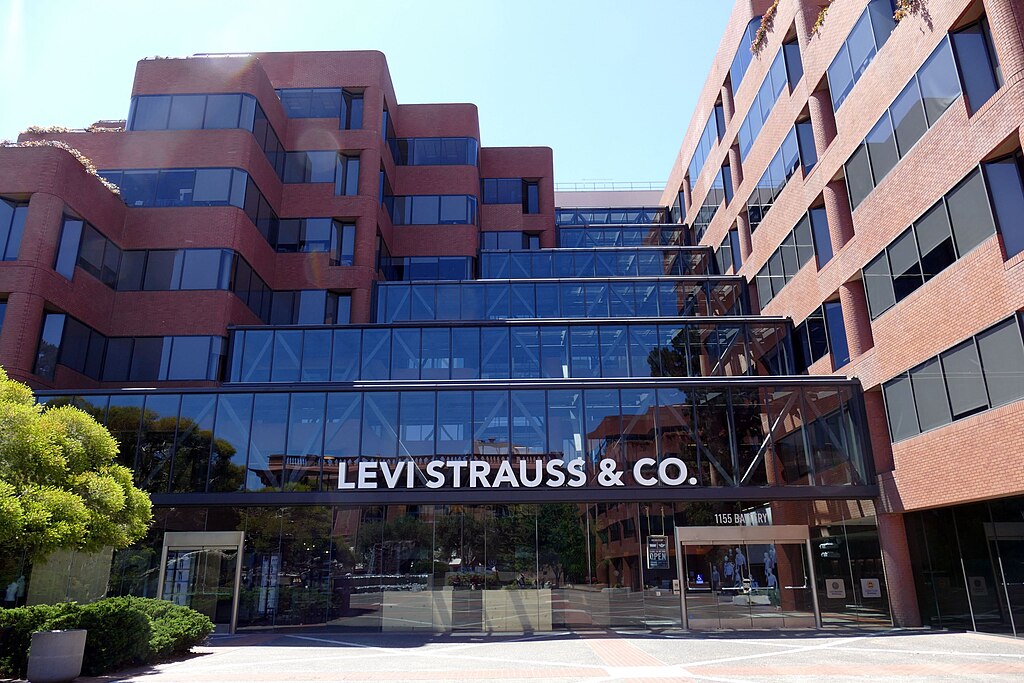
Levi Strauss & Co. boosted its full-year 2025 profit forecast on Thursday but missed Wall Street’s expectations, sending its shares down 7.5% in after-hours trading. The denim maker continues to grapple with rising costs driven by U.S. import tariffs, which are weighing on its margins despite proactive measures.
Executives revealed in a post-earnings call that Levi secured about 70% of its holiday inventory early and introduced modest price hikes to offset the financial hit from President Donald Trump’s shifting tariff policies. However, Chief Financial Officer Harmit Singh admitted that these efforts would not completely counter the impact, with the company’s fourth-quarter gross margin expected to decline by 130 basis points.
Levi now projects its adjusted profit per share for fiscal year 2025 to fall between $1.27 and $1.32, up slightly from the prior forecast of $1.25 to $1.30, though the midpoint remains under analysts’ consensus of $1.31, according to LSEG data. The revised forecast assumes that tariffs will remain at 30% for China and 20% for other countries through year-end.
Industry analysts note that even Levi’s strong brand cannot completely insulate it from trade policy volatility. “Three months ago, investors could imagine denim as tariff-proof, but now it’s clear that even jeans can’t button up against trade uncertainty,” said Michael Ashley Schulman, CIO at Running Point Capital Advisors.
Levi continues to focus on strengthening its direct-to-consumer business, expanding product lines, and maintaining tighter control over inventory. Merchandise levels rose 12% year-over-year as the company sourced most products from South Asia, including Bangladesh, Cambodia, and Pakistan, regions heavily affected by U.S. tariffs.
Despite challenges, Levi beat Wall Street’s expectations for its third quarter, posting 7% revenue growth to $1.54 billion and adjusted earnings of $0.34 per share, above the forecast of $0.31, driven by strong global demand for wide-leg denim styles.