


 Blue Origin New Glenn Rocket Explodes During Launch Pad Test, Delaying Space Ambitions
  NASA and Roscosmos Chiefs Meet in Florida to Discuss Moon and ISS Cooperation
  China vs. NASA: The New Moon Race and What's at Stake by 2030
  Tabletop particle accelerator could transform medicine and materials science
  Blue Origin’s New Glenn Achieves Breakthrough Success With First NASA Mission
  FDA Adds Fatal Risk Warning to J&J and Legend Biotech’s Carvykti Cancer Therapy
  Neuralink Plans High-Volume Brain Implant Production and Fully Automated Surgery by 2026
  Trump Administration to Launch Autism Initiatives Targeting Acetaminophen Use and New Treatment Options


 Add as a preferred source on Google
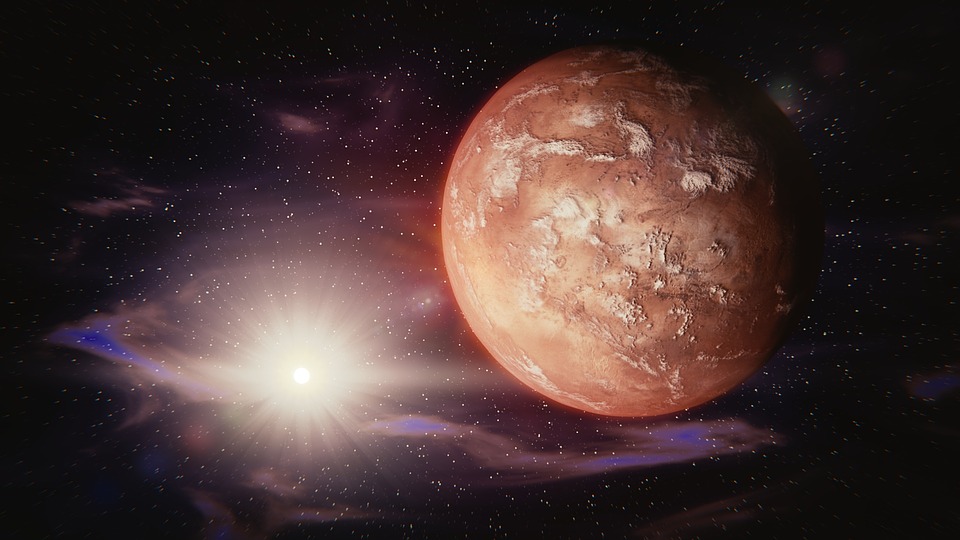
Scientists and space agencies have long been studying and testing theories regarding the possibility of being able to survive on Mars. One scientist, in particular, made a discovery that can potentially hold the answer to the question of life being present on Mars.
Express reports that a scientist from the German Spatial Research Center based in Berlin, Dr. Jean-Pierre Paul De Vera, discovered that living organisms are not only able to survive the conditions found in Mars, but the organisms can be able to thrive there as well. De Vera built a machine that would act to simulate the conditions found on the Red Planet, from the atmospheric conditions, temperature, UV Rays, chemical composition, the works. It was referred to as a Martian chamber.
The Martian chamber was designed with that theory in mind, by testing “the resistance of terrestrial organisms to Martian conditions.”
Back in 2012, Dr. De Vera revealed that the cyanobacteria that were present on Earth around 3.5 billion years ago can survive for weeks in the machine without any setback. He performed the same experiment again, but this time in Antarctica. To his amazement, the organisms he tested in that climate in the machine did not just survive, but it also thrived within the harsh conditions. He explained, “From what we’ve seen, the results we’ve had, it would be possible to find life there, or terrestrial life, microorganisms could survive on Mars.”
Dr. De Vera also shared how impressed he was by the results, especially through the complex organisms, which are different from bacteria, as these organisms photosynthesize. He concluded that it is indeed possible to have life on Mars, and the Red Planet can be in turn, a place for life from Earth to be able to inhabit. He even went on to say that Mars can potentially prove to be fertile enough for certain kinds of organisms.
At the same time, in 2015, NASA revealed its plans for human exploration and colonization of Mars. This will be done in three phases that will eventually result in the fully-sustained colonization of Mars. They hope to execute this by the mid-2030s.







