


 Trump Administration to Launch Autism Initiatives Targeting Acetaminophen Use and New Treatment Options
  SpaceX’s Starship Completes 11th Test Flight, Paving Way for Moon and Mars Missions
  Neuralink Expands Brain Implant Trials with 12 Global Patients
  NASA's Artemis II Mission: First Crewed Lunar Journey Since Apollo
  Blue Origin New Glenn Explosion Could Delay Launch Operations Until 2028
  Trump Signs Executive Order to Boost AI Research in Childhood Cancer
  SpaceX Prioritizes Moon Mission Before Mars as Starship Development Accelerates
  NASA Artemis II: First Crewed Moon Mission Since Apollo Takes Four Astronauts on 10-Day Lunar Journey
  SpaceX Pivots Toward Moon City as Musk Reframes Long-Term Space Vision
  SpaceX Delays Starship V3 Launch Ahead of Potential Record IPO
  Cogent Biosciences Soars 120% on Breakthrough Phase 3 Results for Bezuclastinib in GIST Treatment
  Eli Lilly’s Inluriyo Gains FDA Approval for Advanced Breast Cancer Treatment


 Add as a preferred source on Google
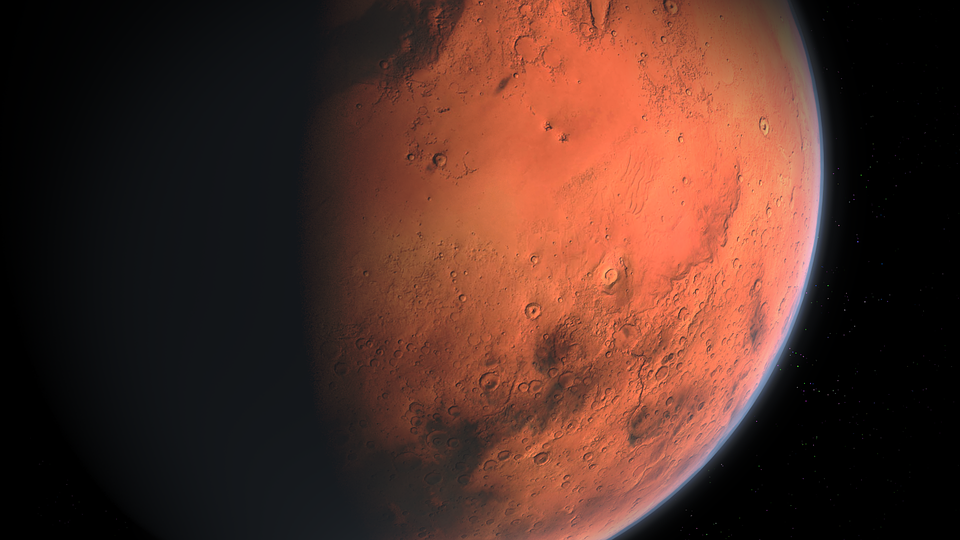
It has long been believed that Mars once had bodies of liquid water long ago before it became the dry desert that we know today. As agencies like NASA prepare for an upcoming Mars mission, the European Space Agency or ESA has made a big breakthrough in the form of finding bodies of water on Mars’ south pole.
Express reports the ESA’s Mars Express spacecraft detected signs of water found in the southern polar region of Mars. The team behind the spacecraft found that this discovery points to briny ponds near the ice found in the region. Liquid water is known for being a fundamental component of life, and it also relates to NASA’s principle when searching for signs of life, which is to follow the signs of water.
The ponds that were discovered, according to the ESA, measured 1.5 kilometers. These findings by the team behind the spacecraft were published in the journal Nature Astronomy. It is possible that the Mars Express spacecraft may have already discovered a similar reservoir of water on Mars back in 2018.
“We identified the same body of water, but we also found three other bodies of water around the main one. It’s a complex system,” said Elena Pettinelli of the University of Rome, who also served as the study’s co-author. The largest from the new ponds that were discovered measured 20 to 30 kilometers and the water is believed to be very salty. Because of the potentially salty water, this would have allowed the water to stay liquid even at the coldest of temperatures.
NASA’s Perseverance Rover is already on its way to the red planet to search for signs of life. Previously, a study proposed a theory that life on Mars may not be found on the surface, but rather under it. According to experts, the lack of surface water does not rule out the possibility of alien life found under it.
“We examined whether conditions amenable to life could exist underneath the surface of rocky objects like the Moon or Mars at some point in their histories and how scientists might go about searching for traces of past subsurface life on these objects. We know that these searches will be technically challenging, but not impossible,” said Dr. Manasvi Lingam of the Florida Institute of Technology.







