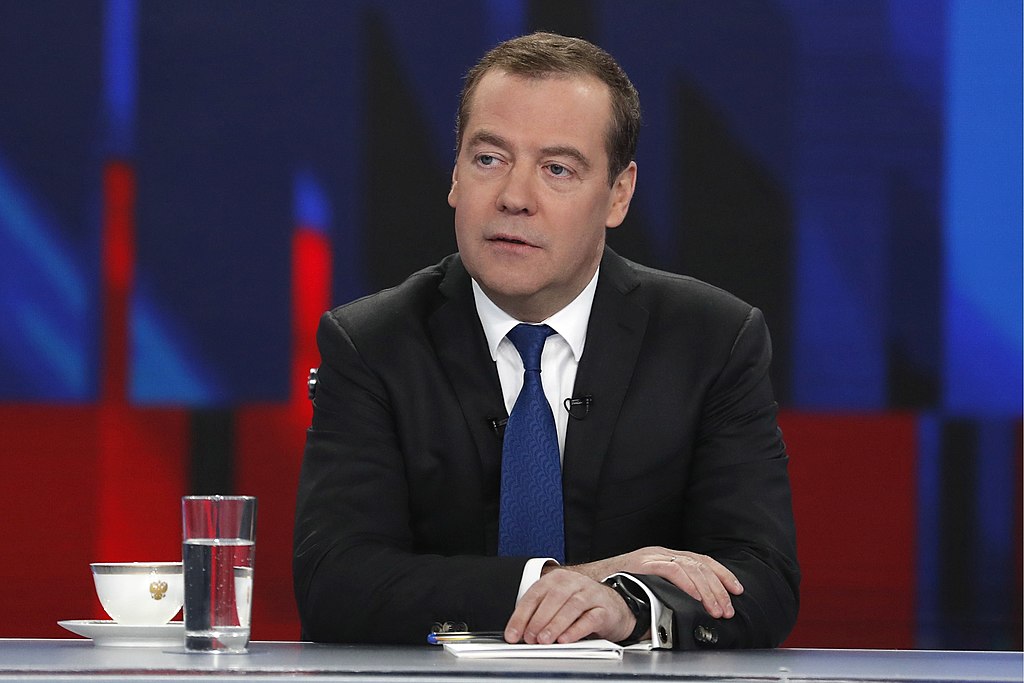
Dmitry Medvedev, Russia’s deputy chairman of the Security Council and a senior Kremlin security official, has warned that the global situation is becoming increasingly dangerous, while stressing that Russia does not want a worldwide conflict. In remarks released on Monday, Medvedev said tensions are rising as a result of ongoing geopolitical confrontations, particularly following Russia’s 2022 invasion of Ukraine, which sparked the most severe standoff between Moscow and the West since the Cold War.
Speaking in an interview with Reuters, TASS, and Russian war blogger WarGonzo at his residence outside Moscow, Medvedev said the “pain threshold seems to be decreasing” across the world, raising the risk of escalation. While emphasizing that Russia is “not crazy” and has no interest in a global conflict, he added that such an outcome “cannot be ruled out,” highlighting the fragile state of international security.
Medvedev praised U.S. President Donald Trump, noting that renewed contacts between Washington and Moscow were encouraging. He suggested that dialogue with the United States could help reduce tensions, even as Trump’s envoys attempt to negotiate an end to the war in Ukraine. However, Medvedev accused Western powers of repeatedly ignoring Russian interests, arguing that this disregard has contributed to the current crisis.
Once regarded as a moderate during his presidency from 2008 to 2012, Medvedev has adopted a far more hawkish tone in recent years. Foreign diplomats view his comments as reflective of hardline thinking within Russia’s political elite, even though President Vladimir Putin remains the ultimate decision-maker on policy.
The war in Ukraine continues to divide narratives. Ukraine and its European allies describe the conflict as an imperial-style land grab and warn that a Russian victory could threaten NATO. Moscow rejects these claims, calling them unfounded. Medvedev also dismissed Western warnings about alleged Russian or Chinese threats to places like Greenland, labeling them “horror stories” used to justify Western actions.
Overall, Medvedev’s remarks underscore growing global instability, persistent Russia–West tensions, and the Kremlin’s insistence that while escalation is dangerous, Russia believes it is defending its national interests rather than seeking a broader war.