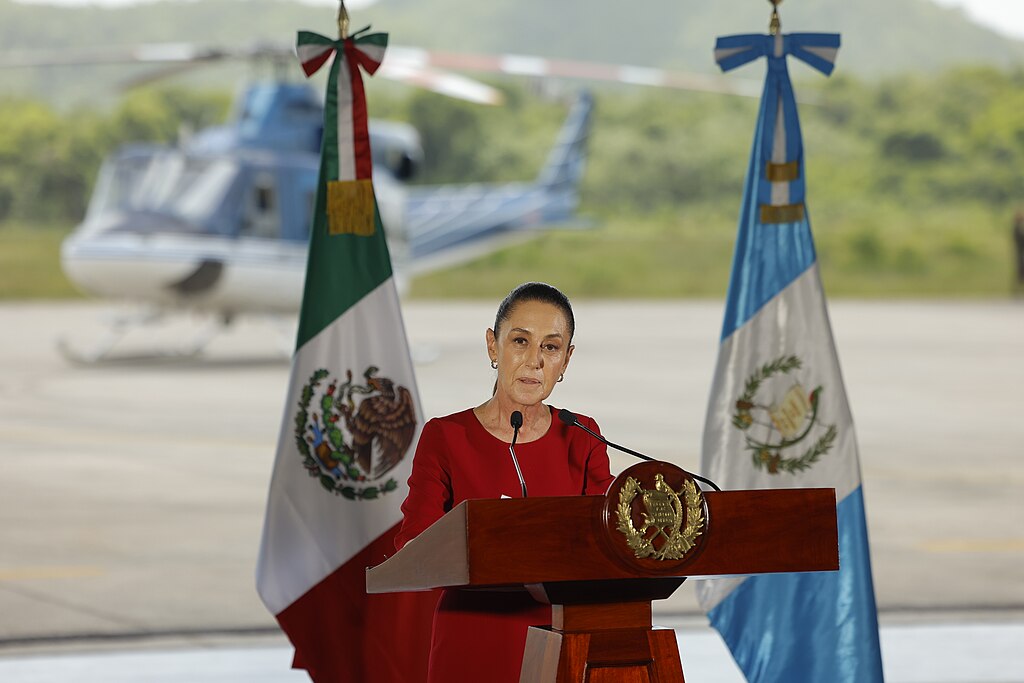
Mexican President Claudia Sheinbaum said Thursday her government does not seek conflict with countries affected by its new tariff measures, including China. She emphasized the move is aimed at strengthening Mexico’s economy and industrial capacity, not targeting trade partners.
On Wednesday, Mexico announced tariffs of up to 50% on Chinese cars as part of a broader import levy overhaul covering hundreds of products worth around $52 billion. The decision, impacting nations without free trade agreements with Mexico, has raised speculation that it was meant to appease the United States, Mexico’s top trade partner. Sheinbaum rejected this, stating the plan was part of an industrial strategy proposed before Donald Trump’s election.
China, Mexico’s largest auto supplier, exported over 177,000 vehicles in the first eight months of this year, according to Mexico’s statistics agency INEGI. General Motors was the top U.S. automaker exporting from China to Mexico, with the Chevrolet Aveo leading shipments. Mexico’s economy minister explained that Chinese cars were being sold below reference prices, making tariffs necessary to protect local producers.
China’s Foreign Ministry spokesperson Lin Jian responded that Beijing opposed restrictions imposed under “various pretexts” but hoped both nations would cooperate and avoid conflict.
Mexico’s automotive industry association AMIA welcomed the tariff increase, saying it would ensure fair competition and boost jobs. Mexico, a key car manufacturer exporting mainly to the U.S., also imports hundreds of thousands of vehicles annually. The new tariffs aim to balance the market, protect local production, and strengthen Mexico’s automotive sector.
By imposing higher import duties, Mexico seeks to safeguard its domestic industry while maintaining open dialogue with affected countries, particularly China, to avoid escalating trade tensions.