
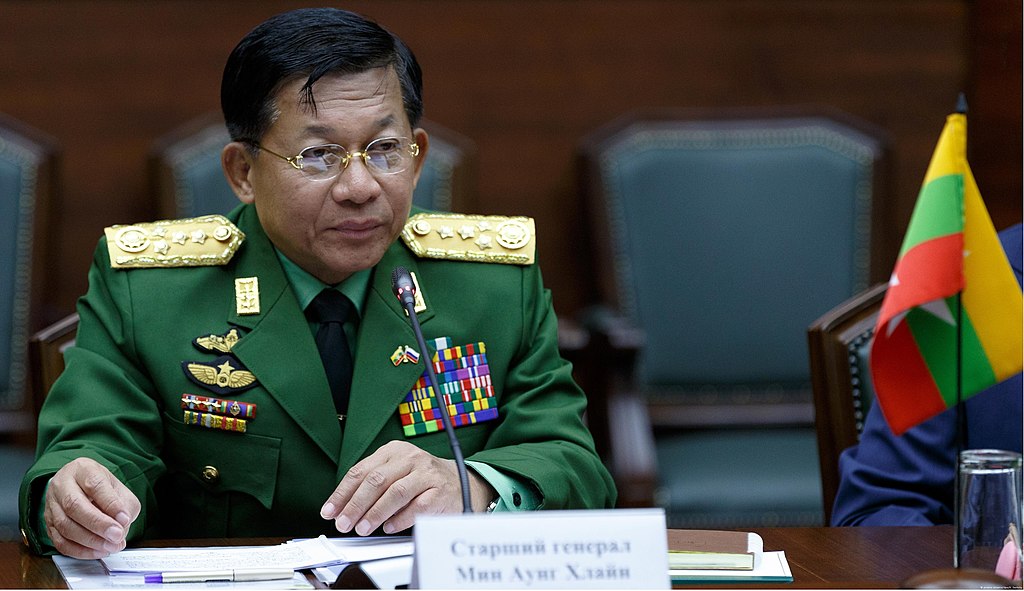
Myanmar’s military leader, Senior General Min Aung Hlaing, has formally requested a reduction in the 40% U.S. tariff on Myanmar exports, proposing a revised rate of 10% to 20%, according to state media reports on Friday. The request was sent in response to a letter from U.S. President Donald Trump notifying Myanmar of the imposed tariff hike.
In a bid to ease trade tensions, Min Aung Hlaing expressed readiness to dispatch a negotiation team to Washington to discuss terms. He also offered reciprocal trade terms, suggesting Myanmar would reduce its own tariffs on American imports to between 0% and 10%. The move signals Myanmar’s interest in maintaining economic ties and avoiding punitive trade measures amid growing geopolitical challenges in the Indo-Pacific region.
“The senior general acknowledged the president’s strong leadership in steering the U.S. toward national prosperity and praised Trump’s patriotic commitment,” the report added, reflecting a diplomatic tone intended to strengthen bilateral relations.
The increased U.S. tariffs on Myanmar goods are part of a broader reshaping of global trade dynamics under Trump’s administration. Analysts say Myanmar, already facing international sanctions and economic strain, is eager to secure favorable trade conditions to support its export-driven economy, particularly in sectors like apparel and agriculture.
The proposal highlights Myanmar’s attempt to re-engage with key global markets and protect its economic interests amid shifting U.S. trade policy. Whether the Trump administration will entertain tariff adjustments remains uncertain, but the request marks a notable gesture from the junta to avoid further economic isolation.
This development comes as Washington reassesses its trade relationships across Asia, balancing strategic interests with economic engagement. Myanmar’s willingness to compromise may open the door for negotiations if U.S. officials see an opportunity to advance American trade goals while reinforcing regional influence.


