


 Trump Administration to Launch Autism Initiatives Targeting Acetaminophen Use and New Treatment Options
  Trump Signs Executive Order to Boost AI Research in Childhood Cancer
  Senate Sets December 8 Vote on Trump’s NASA Nominee Jared Isaacman
  Tabletop particle accelerator could transform medicine and materials science
  Blue Origin New Glenn Rocket Explodes During Launch Pad Test, Delaying Space Ambitions
  Neuralink Expands Brain Implant Trials with 12 Global Patients
  SpaceX’s Starship Completes 11th Test Flight, Paving Way for Moon and Mars Missions
  Cogent Biosciences Soars 120% on Breakthrough Phase 3 Results for Bezuclastinib in GIST Treatment
  Trump Administration Releases New UFO Files and Apollo Mission Records
  Trump and Merck KGaA Partner to Slash IVF Drug Costs and Expand Fertility Coverage
  SpaceX Prioritizes Moon Mission Before Mars as Starship Development Accelerates
  China vs. NASA: The New Moon Race and What's at Stake by 2030
  FDA Adds Fatal Risk Warning to J&J and Legend Biotech’s Carvykti Cancer Therapy


 Add as a preferred source on Google
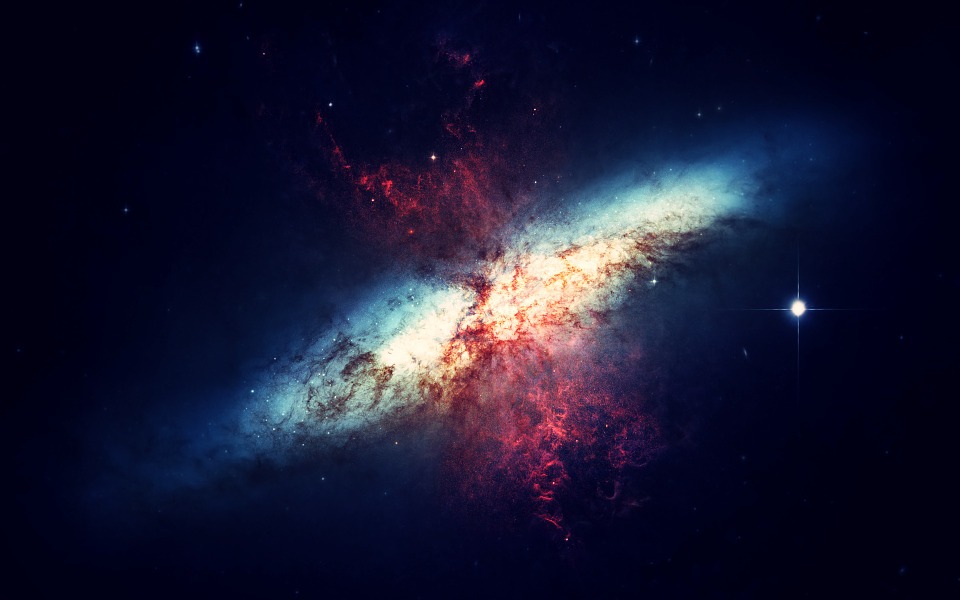
Discoveries are often made by accident, and NASA’s recent discovery holds true to that saying. The agency was analyzing photographs from the Osiris-Rex mission when they found a black hole.
NASA was in the midst of exploring the asteroid Bennu with their Osiris-Rex spacecraft. As the spacecraft sent in images for the researchers to study, they noticed that there was actually a black hole in the background, while the spacecraft was orbiting the asteroid. The black hole was found around 30,000 light-years away, after seeing a glowing pulse coming from the x-ray images.
According to Harvard research scientist Branden Allen, there were no existing objects in that position in space from their initial checks. Upon closer examination, they found that the black hole was part of a binary. They have since named the black hole MAXI J0637-430. MIT graduate student Madeline Lambert, who designed the command sequences for the instrument, expressed her joy upon the discovery and said that detecting the x-ray burst “is a proud moment for the REXIS team. It means our instrument is performing as expected and to the level required of NASA space instruments.”
The agency has since stated that the reason why x-ray emissions, such as the one from the black hole, could only be observed from space and not from Earth is due to the atmosphere. The atmosphere is shielding the Earth from these x-rays, and thus could only be seen from space.
The x-ray emissions happen when a black hole pulls in material from an orbiting star. The material spirals into the disk that surrounds the black hole, a large amount of energy is produced, usually in the form of x-rays.
Meanwhile, it was previously reported that alien life might exist in an exoplanet that surrounds a black hole, according to an expert. According to NASA physicist Jeremy Schnittmann, black holes radiate enough energy to be able to sustain life. Schnittmann’s research was based on the movie Interstellar, and he wanted to test out the theory that was presented in the film, which was that black holes could produce enough energy to sustain life.
Schnittmann said that life orbiting the black hole could exist through accretion disks, which are disks made up of other materials and objects that go around a black hole. The friction between these disks produces a huge amount of energy, depending on the size of the black hole.







