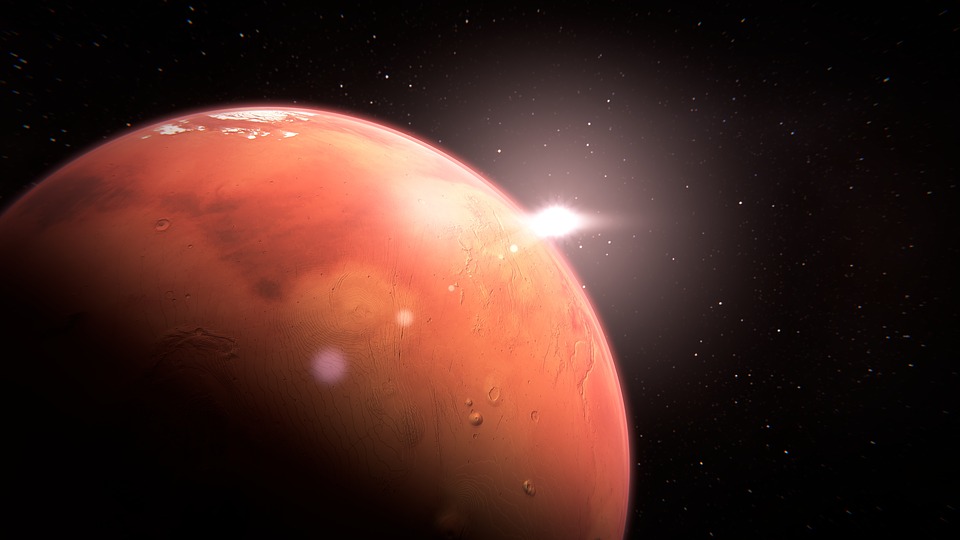
Plans for colonizing Mars have been in the works for some time, and a recent discovery of organic lifeforms on the Red Planet by NASA might have significant implications on the effort. It might not be aliens in the way that many people might have hoped, but it’s nevertheless an important discovery for science. It might also shed some light on the history of Mars.
This new development marks an achievement that was over four decades in the making. NASA has been searching for signs of life on Mars for the better part of 40 years, and now it has, Ars Technica reports. The find was made by the Curiosity rover, which discovered several varieties of organic compounds on the Red Planet. It did so by heating some rocks by up to 500 degrees Celsius.
If nothing else, this discovery hints that life once existed on Mars since organic molecules are considered to be among the most promising leads to this fact. These are the basic building blocks of life after all, and make for one of the leading theories on how life on Earth started.
On that note, this development also unlocked a whole host of questions that outnumber the answers. Futurism goes into specifics as to what these discoveries were and what their potential implications are. Suffice it to say, it could also have a profound impact on any colonization efforts that private agencies or governments implement on Mars.
It’s currently unlikely that humanity will actually meet Martians of any kind upon arrival on the planet. However, with the Curiosity still roving around its red surface, there’s a chance that even more groundbreaking discoveries can be made. Currently, scientists are hoping that the question of whether or not life ever existed on Mars can be answered once and for all.