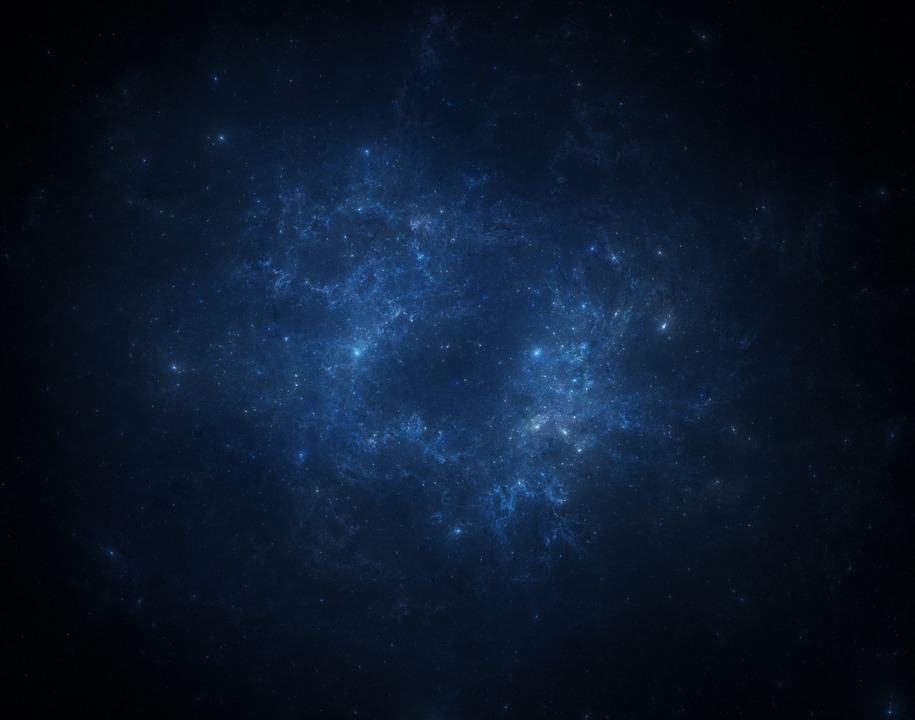
Certain phenomena in space tend to go unanswered for a while and it can stay unsolved, at least it could be said for the Blue Ring Nebula. However, NASA was able to solve its origins after 16 years of remaining a mystery.
The Blue Ring Nebula’s origins remained relatively unknown for 16 years until recently when astronomers were able to figure it out. A study by researchers using data from NASA found that the blue ring that makes up the celestial object is actually the base of a cone-shaped cloud made up of glowing molecular hydrogen. Other observations from the W M Keck Observatory in Hawaii also ended up with the same conclusion. It is our perspective that makes the clouds of gas and dust look like blue rings.
NASA scientists, on the other hand, were able to determine the origins of this once-elusive entity. It is suspected that the clouds of glowing debris formed after a star similar to that of our Sun consumed a smaller companion star some thousand years ago.
According to Caltech’s Dr. Keri Hoadley, who is also the lead author of the study, “We think this object represents a late stage of these transient events when the dust finally clears and we have a good view. But we also caught the process before it was too far along; after time, the nebula will dissolve into the interstellar medium and we would not be able to tell anything happened at all.”
From the nebula to our own Milky Way galaxy, astronomers have now discovered the biggest merger of galaxies in the history of our home galaxy. Referred to as the “Kraken,” which also happens to be the oldest merger that occurred with the Milky Way, which took place 11 billion years ago. At the time, the Milky Way galaxy was four times smaller than it is today.
“The collision with Kraken must have been the most significant merger the Milky Way ever experienced,” said the study’s lead author Diederik Kruijssen of the University of Heidelberg in Germany. “Before it was thought that a collision with the Gaia-Enceladus-Sausage galaxy which took place some nine billion years ago, was the biggest collision event.”