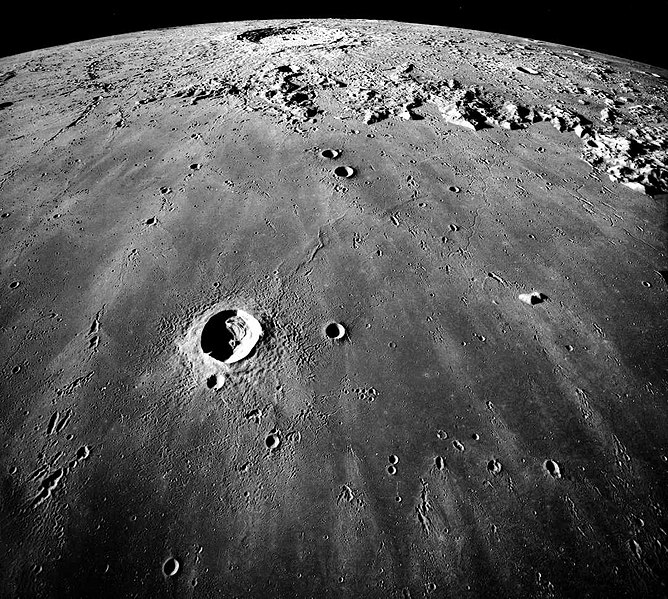
Along with their impending moon mission, NASA is also looking to make a few more discoveries along the way. Among those discoveries may be the possibility that humans can inhabit the moon, or at least below the surface of the moon.
Express reports that the space agency is looking to set up a permanent base on the moon. This would be 50 years since the first-ever trip to the moon. By setting up a permanent base on the moon, this will allow them to make it to Mars. This was one of the biggest challenges that NASA has faced thus far, being able to provide a safe space for astronauts to live in and would protect them from harsh cosmic elements like cosmic radiation, asteroids, and other space junk.
However, Amazon Prime’s ‘New Frontiers in Space’ explains that it can be possible to set up base in the moon, in the lower regions, and under lava tubes. The lava tubes would be the same on Earth as it is on the moon and even explained that back when it was “geologically active” that it had molten rock flowing on the surface. These lava tubes would become the result of these molten rocks, and because gravity on the moon is a bit lower, the lava tubes would most likely have high ceilings.
These lava tubes could potentially be big enough to house actual cities. The idea alone has NASA’s Lunar Reconnaissance Orbiter in partnership with the Lunar Radar Sounder from Japan, interested in looking into.
Meanwhile, Express also reports that NASA is also sending a robotic probe below the ice in Antarctica as part of their testing before they send off the probe into space to further explore the moons in the Solar System. The space agency hopes that they may be able to see if there is life or at least proof of life below the surfaces of the moons.
NASA is sending its Buoyant Rover for an Under-Ice Exploration to Antarctica. The robot will then study the area where the crust as well as the ocean meet. The agency also hopes that when they are able to send the Rover into space, they hope it can reach one of Jupiter’s moons, called Europa.
As to why Europa is the goal, it is because of the evidence that there is an ocean hidden below the icy crust of Jupiter’s moon.