


 China vs. NASA: The New Moon Race and What's at Stake by 2030
  SpaceX Pivots Toward Moon City as Musk Reframes Long-Term Space Vision
  Trump and Merck KGaA Partner to Slash IVF Drug Costs and Expand Fertility Coverage
  SpaceX Delays Starship V3 Launch Ahead of Potential Record IPO
  Trump Administration to Launch Autism Initiatives Targeting Acetaminophen Use and New Treatment Options
  NASA Cuts Boeing Starliner Missions as SpaceX Pulls Ahead
  Tabletop particle accelerator could transform medicine and materials science
  Blue Origin New Glenn Rocket Explodes During Launch Pad Test, Delaying Space Ambitions
  Neuralink Expands Brain Implant Trials with 12 Global Patients
  Blue Origin’s New Glenn Achieves Breakthrough Success With First NASA Mission
  SpaceX Prioritizes Moon Mission Before Mars as Starship Development Accelerates
  FDA Pilot Program Eases Rules for Nicotine Pouch Makers


 Add as a preferred source on Google
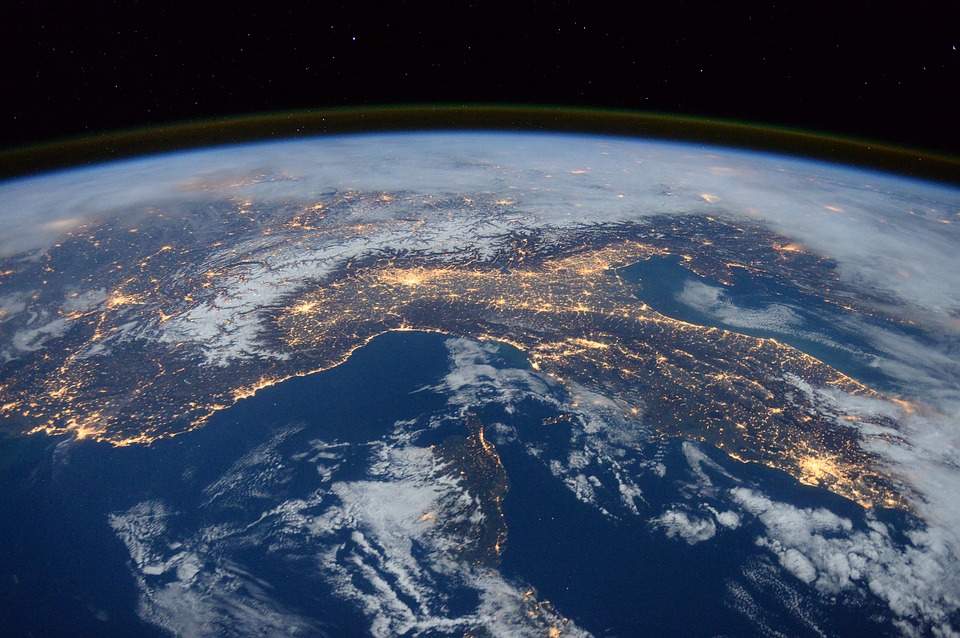
With the recent discoveries, many are now looking towards exploring what lies beyond Earth and NASA is already preparing for upcoming missions. A new study found that the surrounding area of our own planet Earth has 40 percent more hydrogen than believed.
A study published in the Astrophysical journal found that the latest observations made by NASA’s New Horizons spacecraft detected 40 percent more hydrogen atoms in the area of space that surrounds our home planet. This is in comparison to previous studies, but the latest findings are able to shed more light on what makes up our neighborhood in space.
It should be noted that as our solar system travels through the Milky Way galaxy, we are hit by interstellar particles, but we are protected by the heliosphere or the magnetic bubble around the Sun. The heliosphere repels charged particles that are guided by magnetic fields. More than half the interstellar gasses that surround us are neutral also known as having a good balance of protons and electrons.
Princeton University postdoctoral researcher and the lead author of the study Pawel Swczyna used the measurements from the Solar Wind Around Pluto or SWAP to determine the density of neutral hydrogen at the termination shock or the region where the solar wind goes against the interstellar medium. Over a span of months, they found 0.127 particles per cubic centimeter which is equivalent to 120 hydrogen atoms in a space that is equivalent to a quarter gallon of milk.
Meanwhile, NASA previously released a playlist full of sounds that could be heard in space in time for Halloween over the weekend. The playlist is available for listening on SoundCloud and it features sounds from the center of the Milky Way, an earthquake in Mars, the sounds of the aurorae found in Jupiter, as well as the origins of the universe.
“You may have heard some of the creaks, cracks, and cackling noises of our universe before,” said NASA. “Using data from our spacecraft, we’ve gathered a NEW collection of sinister sounds from the depths of space in time for Halloween. Listen to our SoundCloud Halloween playlist filled with new ‘moans’ and ‘whistles’ from our universe that would scare the most ghoulish of creatures.”







