


 Trump Administration Releases New UFO Files and Apollo Mission Records
  SpaceX’s Starship Completes 11th Test Flight, Paving Way for Moon and Mars Missions
  NASA's Artemis II Mission: First Crewed Lunar Journey Since Apollo
  Trump Signs Executive Order to Boost AI Research in Childhood Cancer
  Tabletop particle accelerator could transform medicine and materials science
  SpaceX Prioritizes Moon Mission Before Mars as Starship Development Accelerates
  SpaceX Pivots Toward Moon City as Musk Reframes Long-Term Space Vision
  Neuralink Expands Brain Implant Trials with 12 Global Patients
  Cogent Biosciences Soars 120% on Breakthrough Phase 3 Results for Bezuclastinib in GIST Treatment
  China vs. NASA: The New Moon Race and What's at Stake by 2030
  Eli Lilly’s Inluriyo Gains FDA Approval for Advanced Breast Cancer Treatment
  Trump Administration to Launch Autism Initiatives Targeting Acetaminophen Use and New Treatment Options


 Add as a preferred source on Google
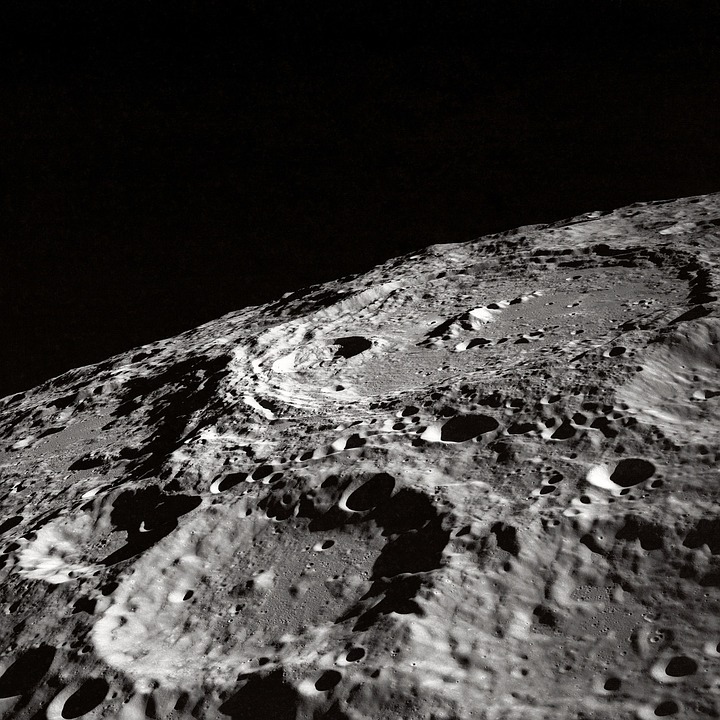
The Moon, as well as other cosmic entities, remain to be a mystery to astronomers as there is still so much to learn about them. Recently, NASA announced one major discovery about our own Moon, revealing the presence of water.
NASA is in the midst of preparing for its upcoming Moon mission under the Artemis program which will send the next humans onto the lunar surface. The agency has recently confirmed that there is water on the Moon in one major announcement. This is part of NASA’s efforts to further understand the Moon in the field of space exploration. The discovery is also a big breakthrough for the agency’s missions to the Moon, Mars, and future space explorations.
University of Colorado assistant professor of the laboratory of atmospheric and space physics Paul Hayne said that the discovery of water on the Moon will be beneficial for NASA. In a statement, Hayne explained that the water would be used for everything NASA would need it for such as rocket fuel.
“The unambiguous detection of molecular water (H2O) on the Moon and areas on the Moon where water could be trapped stably are reported in two papers published this week in Nature Astronomy,” said NASA. “These findings may have implications for future missions to the Moon.”
Scientists back in the 1960s have long suspected that lunar water may be present as ice in the craters in the polar regions of the Moon. NASA has also suspected this on two occasions in 2009 and 2018, and now it has been confirmed.
More on the discoveries made on the Moon, the program “NASA’s Unexplained Files,” also reveals something that was found in a lunar crater. The agency’s Lunar Reconnaissance Orbiter snapped a photo of a crater measuring 130 feet in diameter in the Sea of Islands, an ancient volcanic plane on the lunar surface. Scientists from the agency have said that it was unlike any crater that was seen on the Moon, and that it looked like there was something inside.
Meteor expert Julia Ann Cartwright has ruled out the possibility of the crater being caused by an asteroid collision due to its shape. The researchers have since theorized that something other than an asteroid collided with the lunar surface, but one theory is that it was the remains of an old NASA experiment conducted on the Moon decades ago.







