Global chip making giant Intel recently made headlines for offering to buy computer vision company Mobileye for $15 billion. The move is basically the chip maker’s declaration that it intends to enter the self-driving market soon. Intel’s direct competitor in this field is NVidia, which is also a global brand that had already dipped its toes in the driverless car industry before and it just announced a partnership with a truck making company.
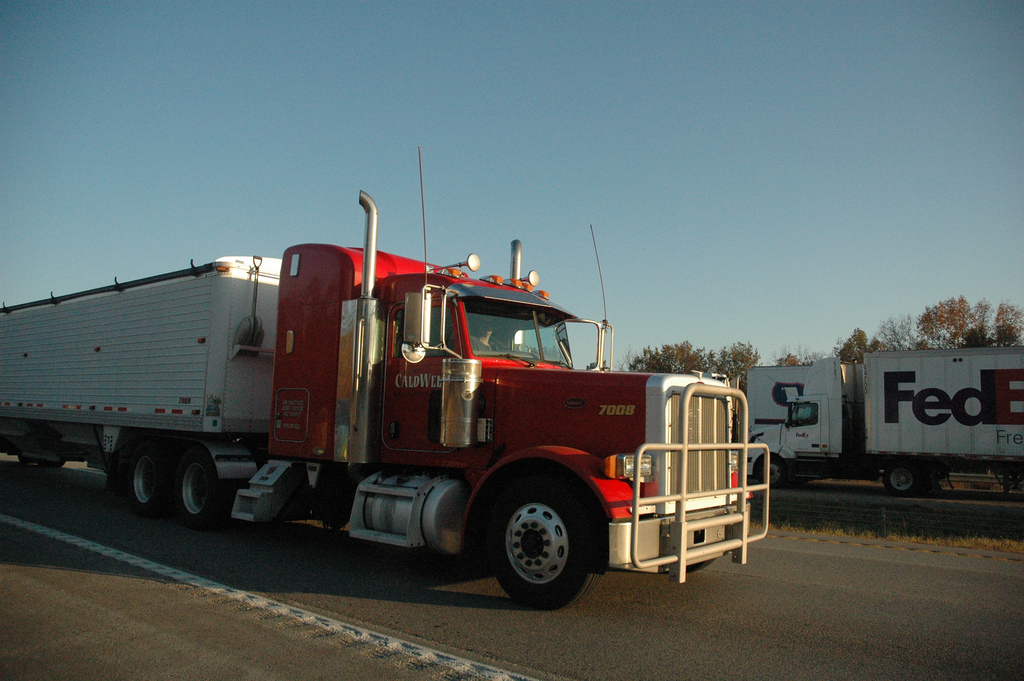
PACCAR is a manufacturer of semi trucks for several major brands, CNET reports, and its partnership with NVidia signals a major shift in how the power balance in the auto industry might look like in the future. The collaboration is meant to produce a fleet of driverless trucks, which is a huge step for the GPU company to achieve its goals of expansion. NVidia CEO Jen-Hsun Huang said as much during a recent Bosch Connected World conference.
"This is probably largest single mass of a product that we've helped make," Huang said.
For now, the only thing that the partnership has yielded is a concept video, which roughly showcases what the trucks will eventually be able to achieve with the self-driving technology that NVidia is making. Even so, it shows a lot of promise when taking the two companies’ ambitions of making Level 4 trucks that will be delivering goods all over the world into consideration.
As to how long before people can start seeing these auto-trucks on the road, however, it seems that companies can’t really come to an agreement on an actual timeline. For example, Huang believes that self-driving trucks will be a common sight on highways by 2025, Reuters reports. Bosch CEO Volkmar Denner disagrees and says that it will actually be six years longer than that.
Regardless of the timeline, it’s clear that there is no stopping the inevitable dominance of autonomous vehicles on the roads in the coming decades. The only question is which company will be at the top of this new industry.